Body Language:The (Mostly) Wordless Books of Jan Ormerod
Note: this post was originally published April 6, 2026 on the VQC substack which you can find and follow here
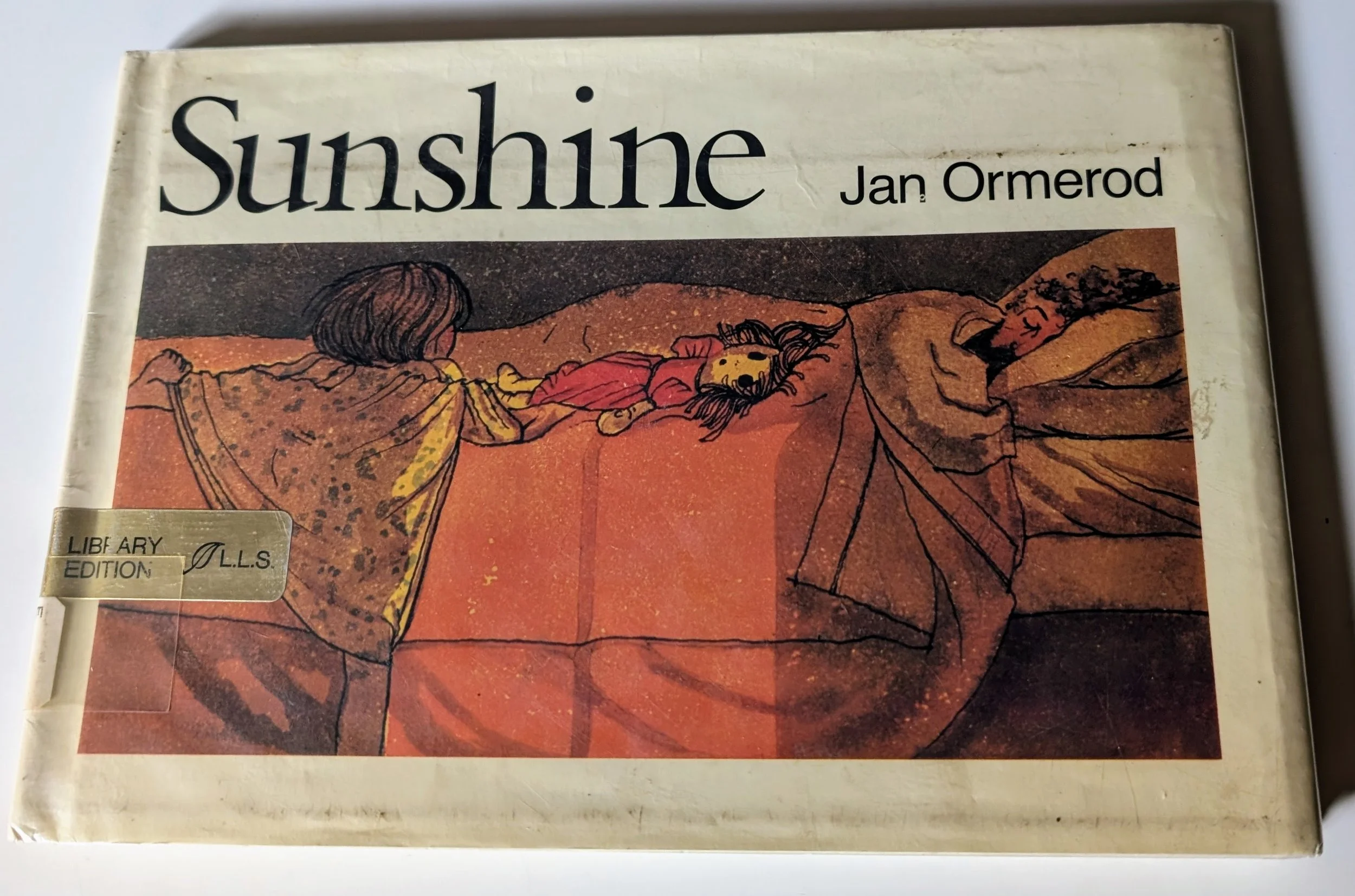
My copy of Jan Ormerod’s Sunshine: 1981 First U.S. edition hardcover and a Durham County Library discard.
Sunshine came home with us from a library book sale in Durham, N.C., where we lived 2007-2010 while I did my MLS down the road at UNC-Chapel Hill. I started grad school 6 months pregnant, had my daughter Simone in January 2008, and took the winter semester off, which is about as close to a maternity leave as you can get in the U.S. Alone at home, with no drivers license, I pushed her to the library regularly in the sturdy Bob jogging stroller we’d gotten as a baby gift. It never fulfilled its intended purpose of recreational running, but the undercarriage could hold a load of groceries and a tall stack of books.
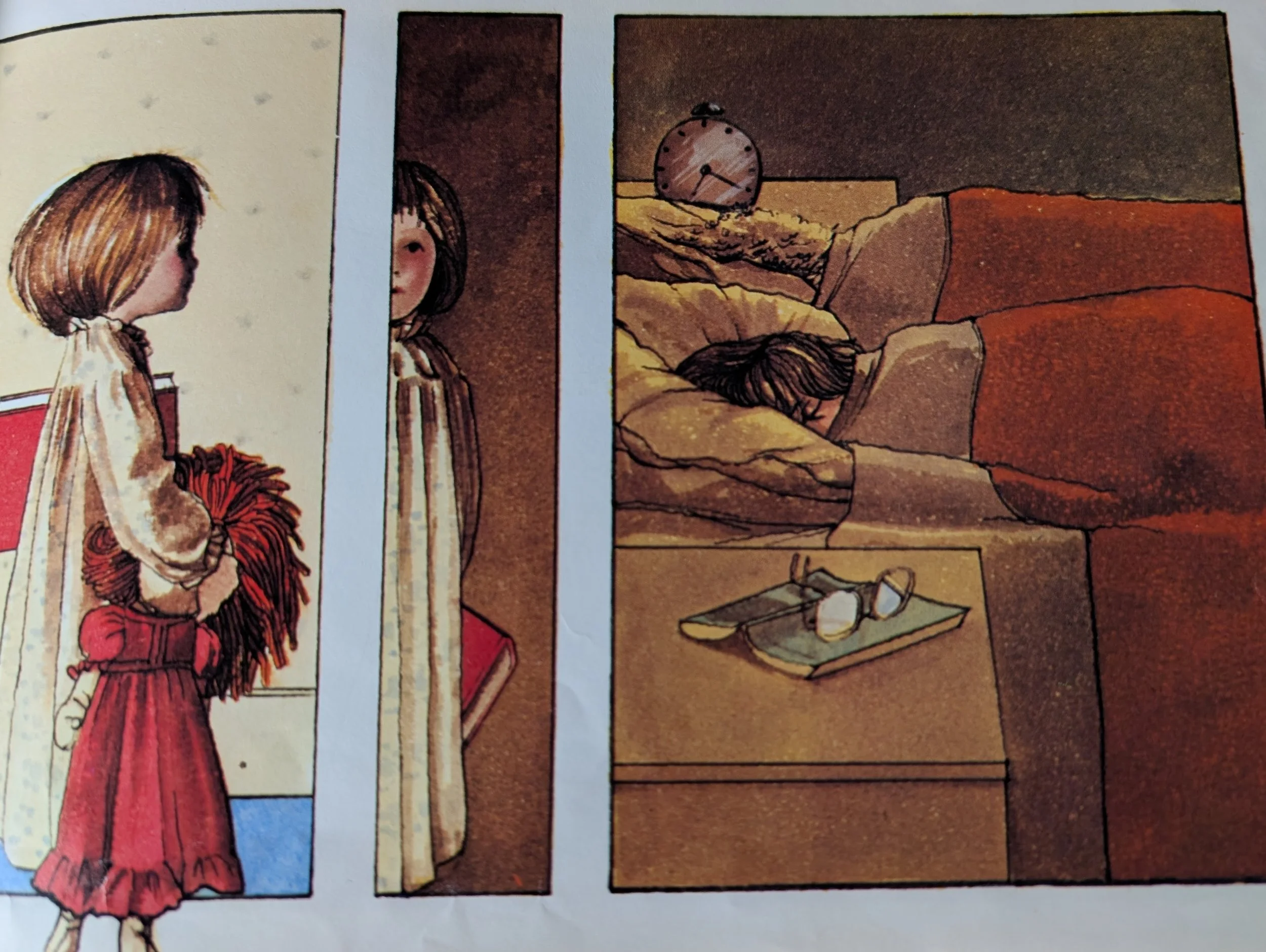
Sunshine quickly became a favorite in the bedtime story roundup, even though it’s set in the morning. It’s a wordless book, the story unfolding through panels of illustrations, which let first me, and later Simone, describe the action: a family wakes up and gets ready to leave for the day.
It was Australian Jan Ormerod’s (1946-2013) first book. She had studied painting but hadn’t considered illustrating children's books until she and her husband Paul Ormerod, a children’s librarian, moved to England and they had their first daughter Sophie in 1976. As she said in a 1982 interview:
“Until then I hadn’t thought much about children. I’d never been very maternal and children had never really been a part of my life.”
But the daily routine of family life changed her work, as it does, and she got it down on paper.
The panels in Sunshine are like an early graphic novel, moving us through time in a family’s morning, which can be slow and sleepy until it builds to a frantic rush.
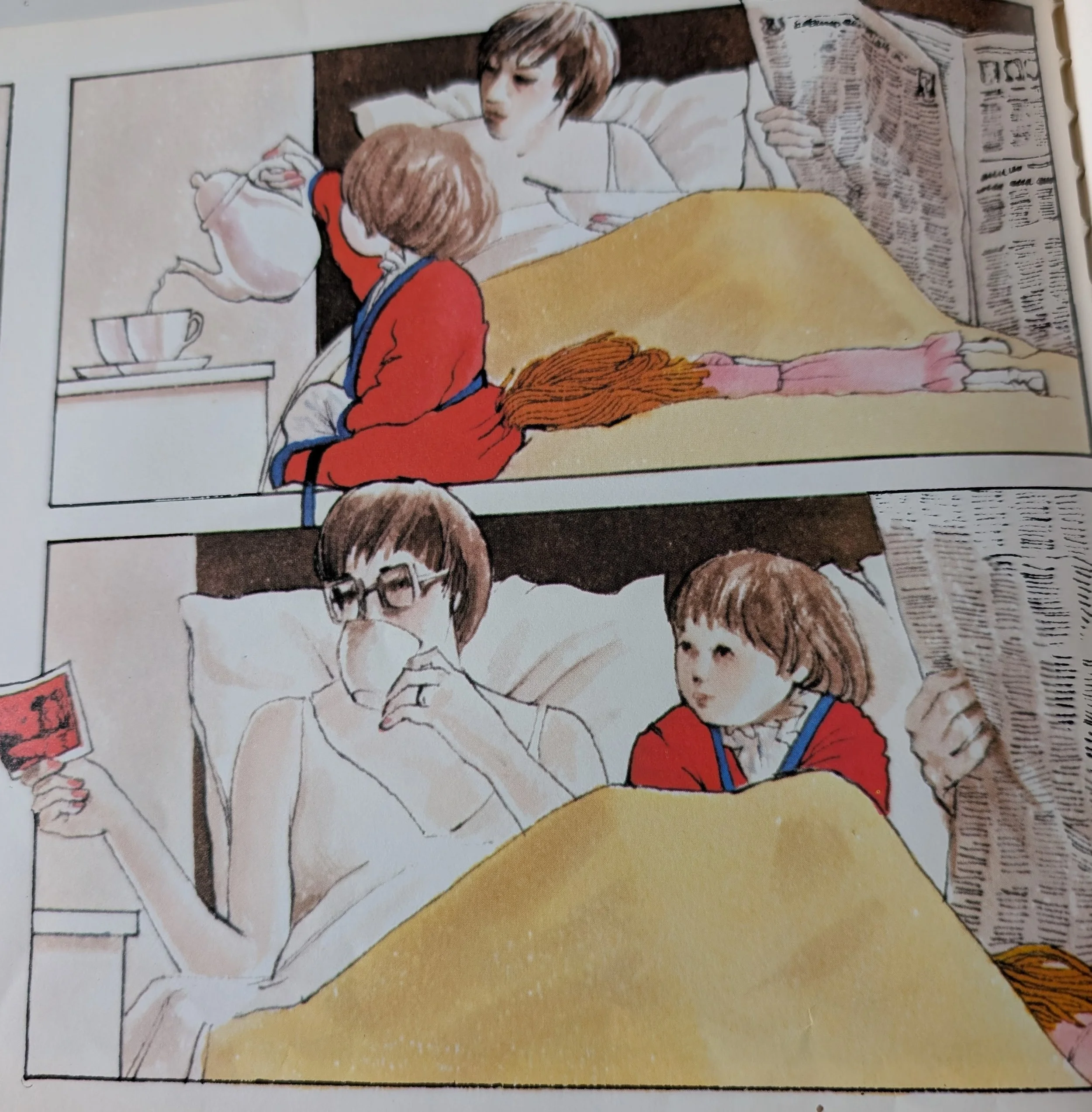
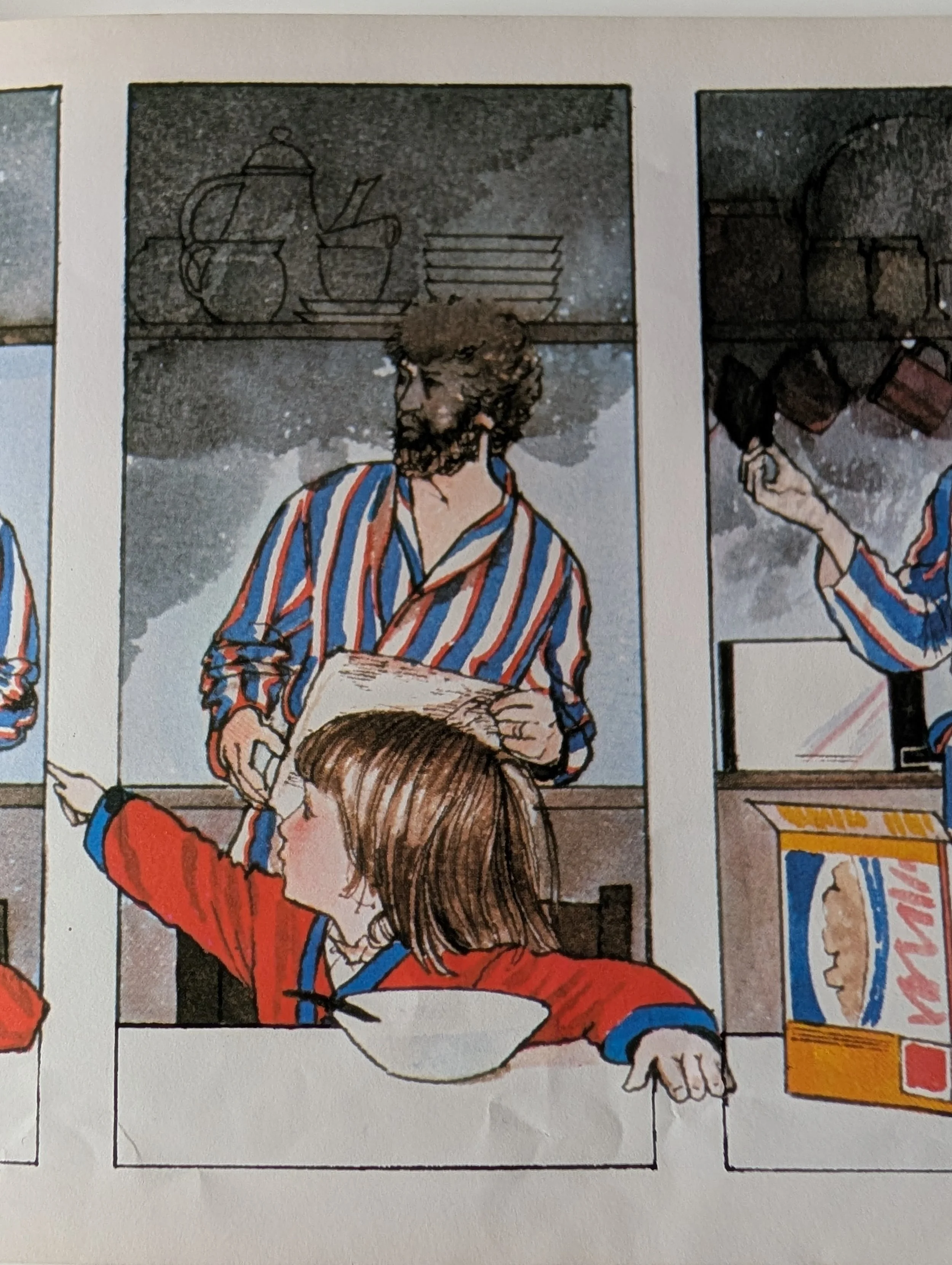
Ormerod was deeply influenced by the great Shirley Hughes, and you can see it in the character all her children have, their faces and movements. Ormerod also adopted the language of sequential art and comic books from Hughes :
“I tried always to use the frames not as limitations but as part of the storytelling. I learned a lot from Shirley Hughes. I pored over Up and Up [1979] for hours!”
The frames move the action of the busy weekday morning along, ticking by like the minutes but I like how Ormerod allows the action to creep over the edges, breaking the frames. Family life isn’t so neat and tidy as to be contained in a box.
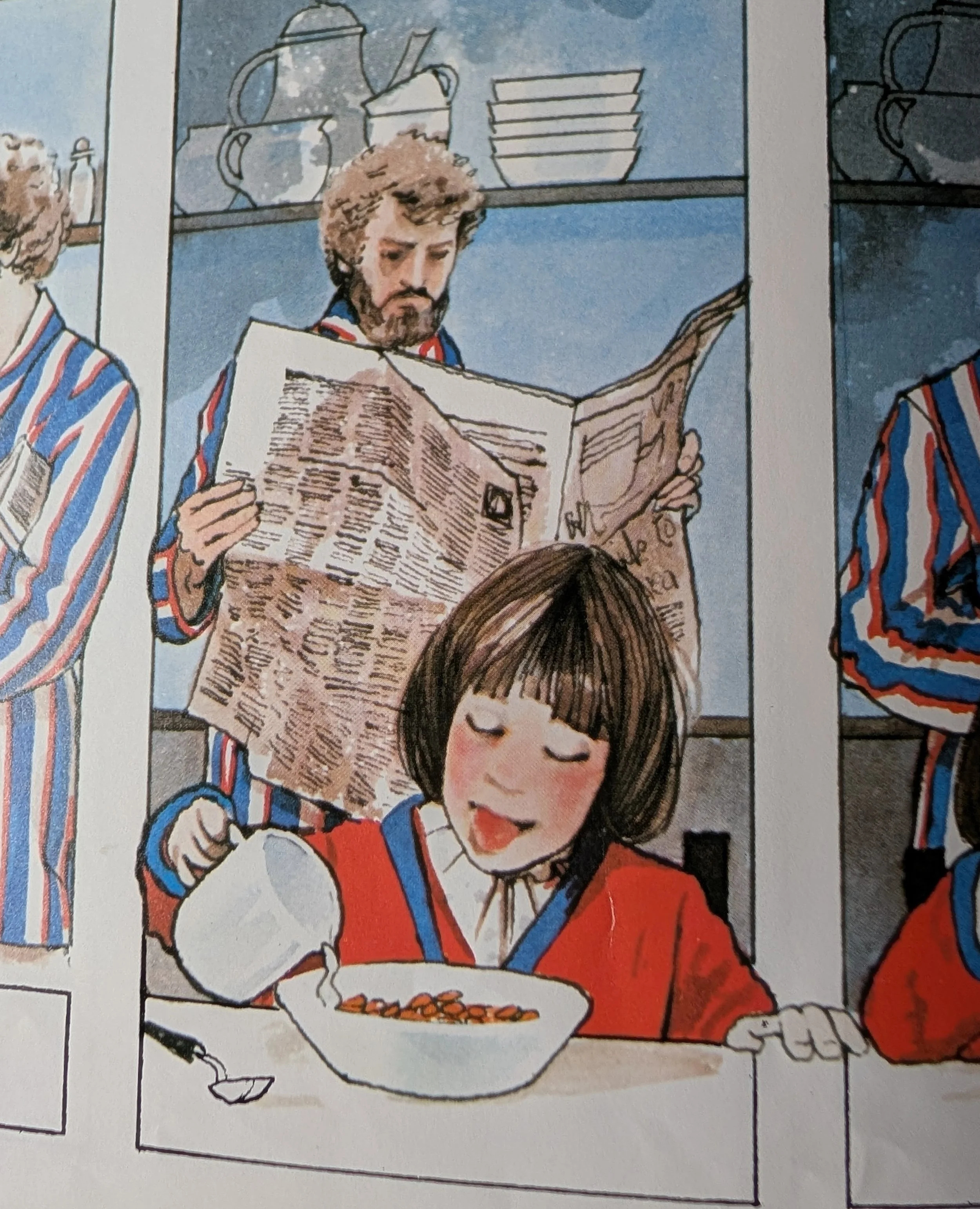
Sunshine holds layers of memory for me. In those early parenthood days, there was no such thing as a leisurely morning. I got ready for grad school, and my husband got ready for work while we also got Simone dressed, fed, hair brushed, coat and shoes on. Then it was out the door in a rush to drop her at daycare, either on my bike or in our aging Subaru Outback, hurrying, always hurrying. But just like in Sunshine, there were sweet moments too, when Simone would crawl in between us and read and play before we got up, and as she learned to spoon her own cereal and choose her own outfit.
That particular stubborn individualism of young children, the determination to “do it myself” is something Ormerod learned from her own daughter.
‘I did the first drawings when Sophie was about four. I was so delighted by the beautiful relationship between us three – and by the resourcefulness of our four year old.’
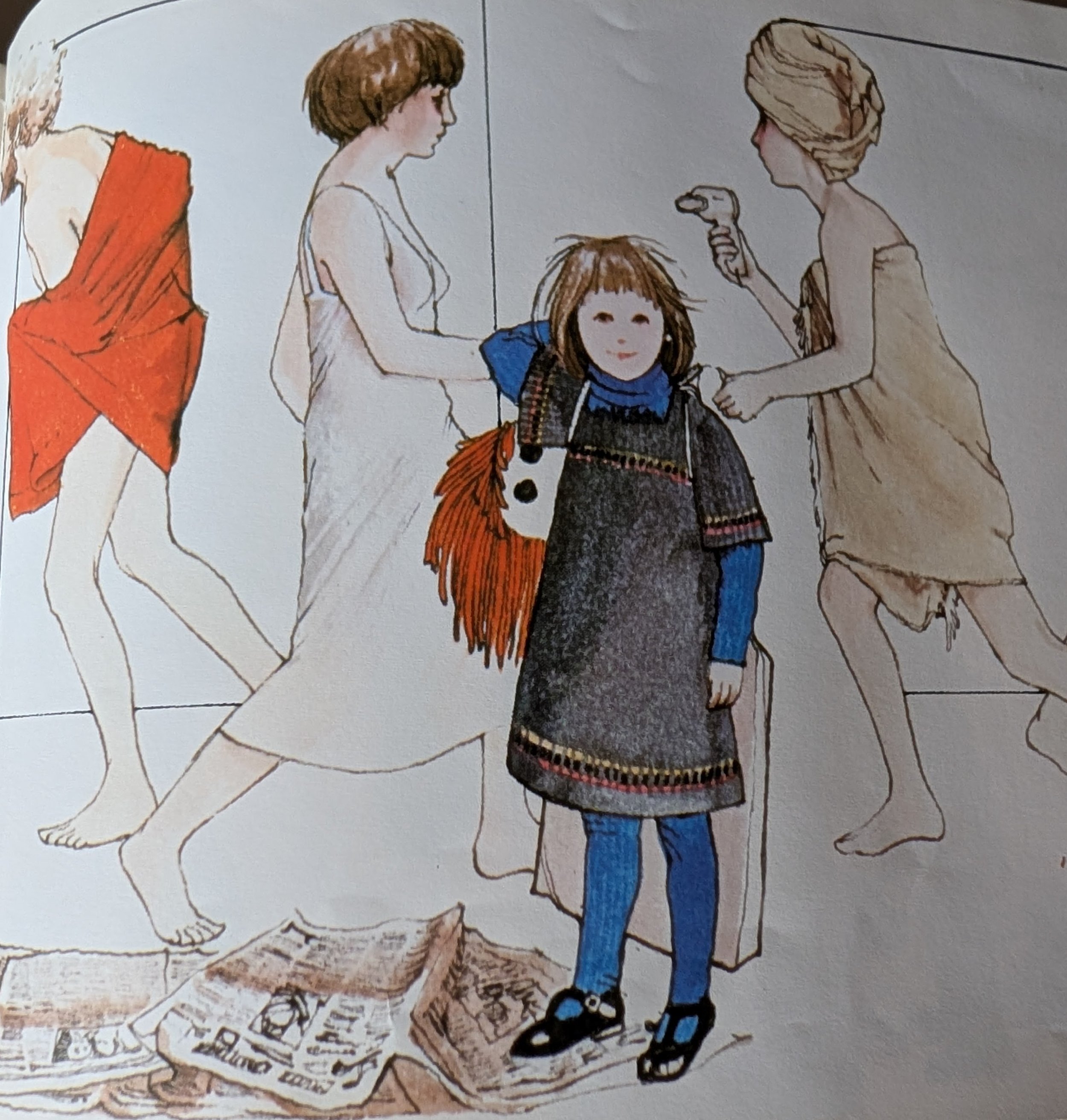
Indeed in Sunshine, the little girl leads the action, pulling her parents through the morning tasks, using the bathroom, brushing her teeth, and in a two-page spread, getting herself dressed.The getting dressed sequence is where my own childhood memories overlay on Sunshine. Her clothing - the wool tights, turtleneck, t-strap shoes, and smock dress edged in rick-rack - is just the kind of outfit I wore as a kid (and honestly the kind of outfit I would still wear today, someone please make that dress for me...)
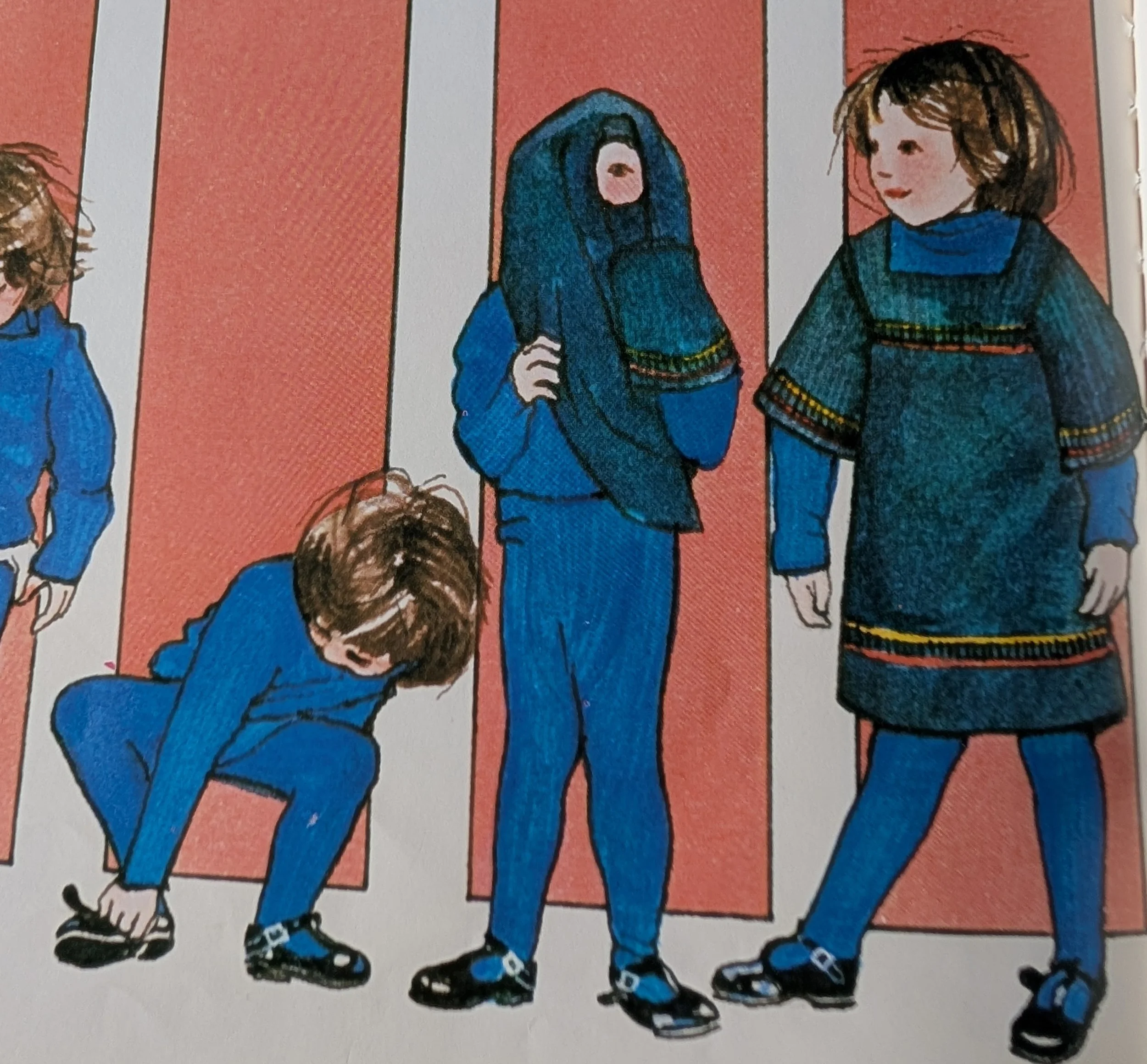
I keep a running list of “Tattoos from Kids Book Illustrations I Would Get If I Were To Get a Tattoo” and the panel of the girl pulling up her tights is definitely on the list. The scratchiness, the ribbed ridges, the baggy elephant knees and her determined effort to pull them up, hopping to get her toes right against the seam, I remember it all.
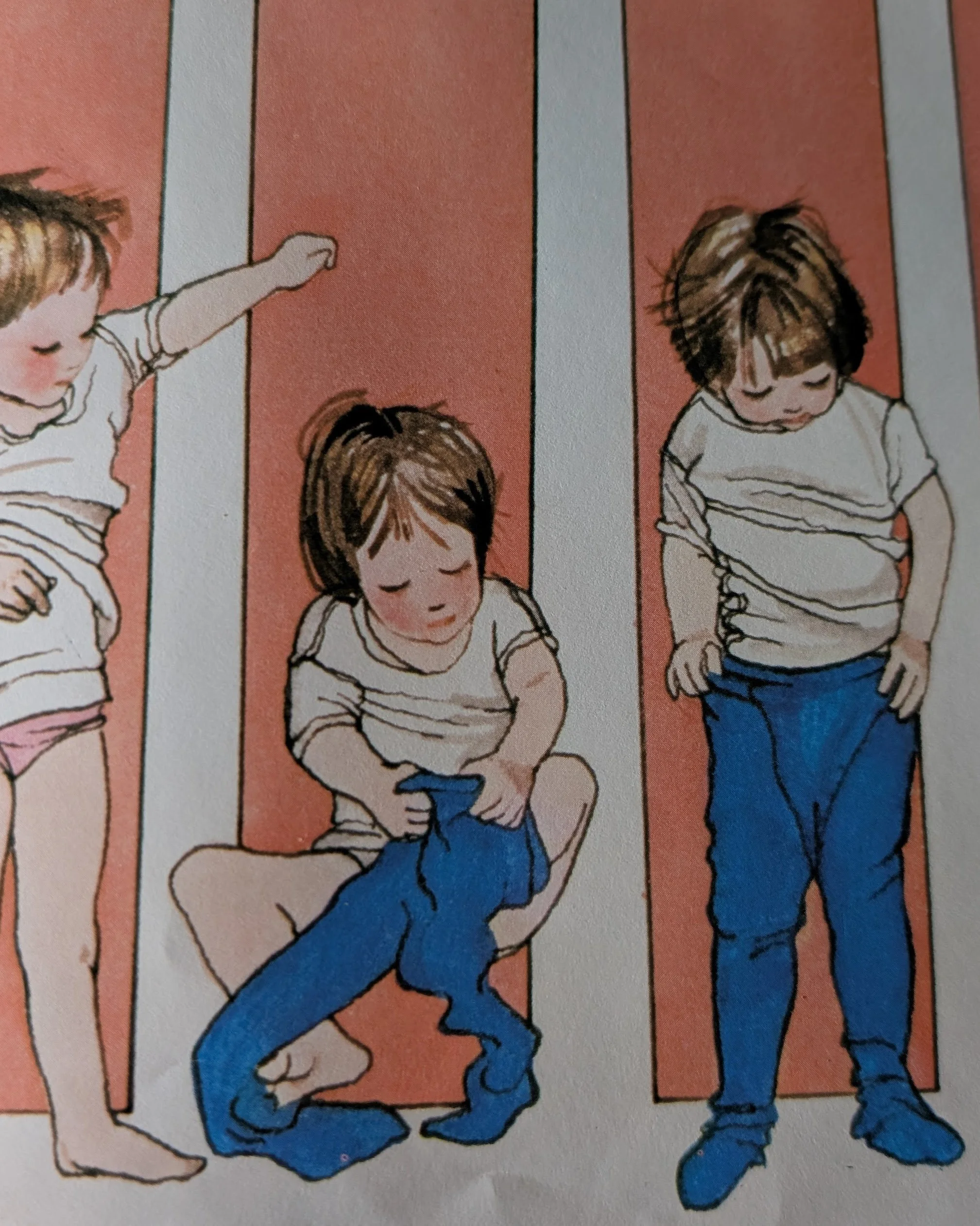
The whole book is suffused with the early 1970/early 80’s nostalgia of my childhood: wind-up alarm clocks, parents reading newspapers and books in bed, hair drying while perched on the bathtub, styling the 80’s mushroom cut my Mom sported as well.
Ormerod went on to create over a hundred books before her death in 2013. Many are simple stories that rely on the children and baby’s energy coming right off the page through their faces and movement, always movement.
“I always conceive of a whole book as if it were a film, a continuous flow of action,” she explained in 1993’s Midnight Pillow Fight.
Turning the pages of Sunshine is like watching an old home movie of my own childhood but also my daughter’s.
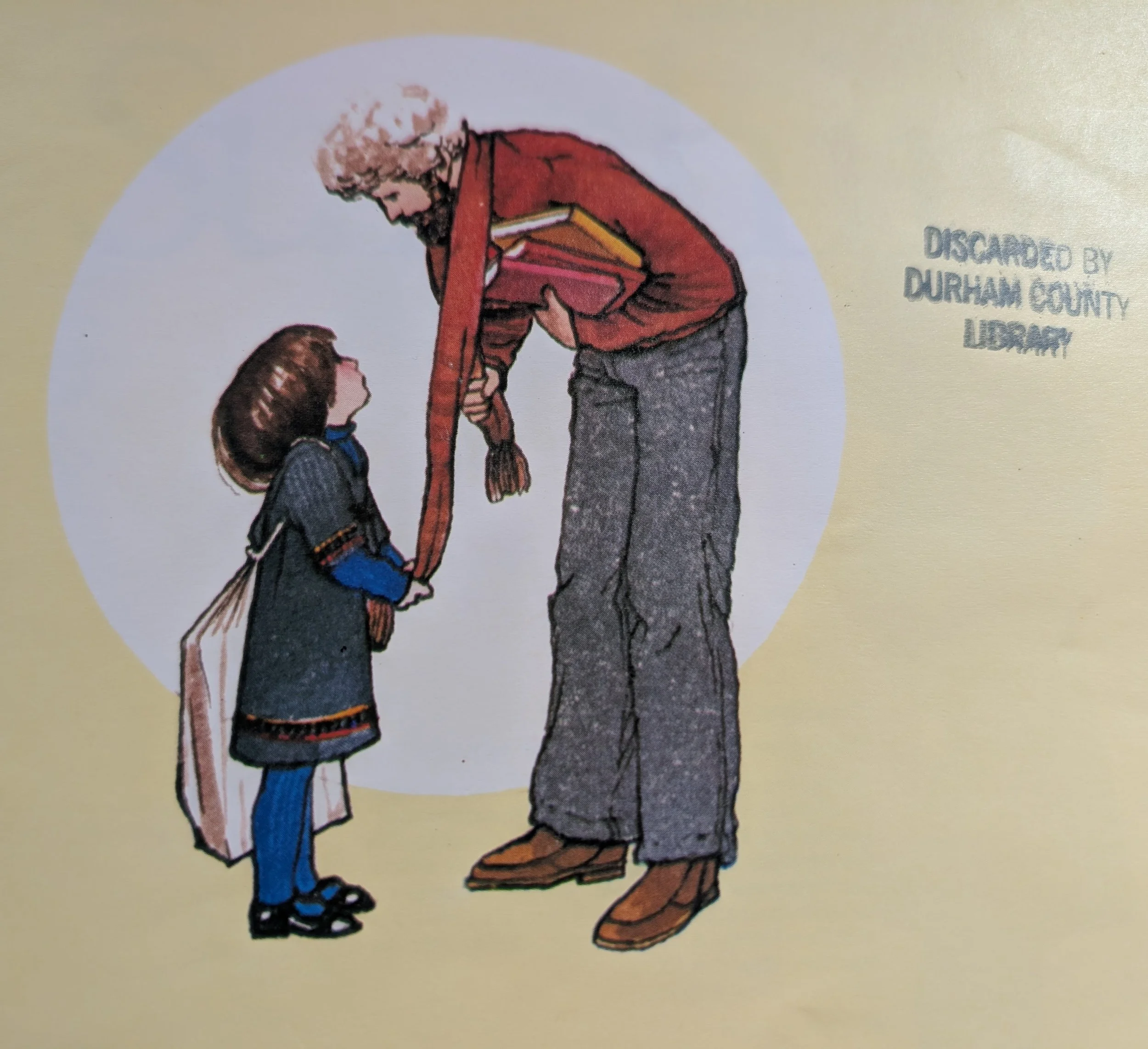
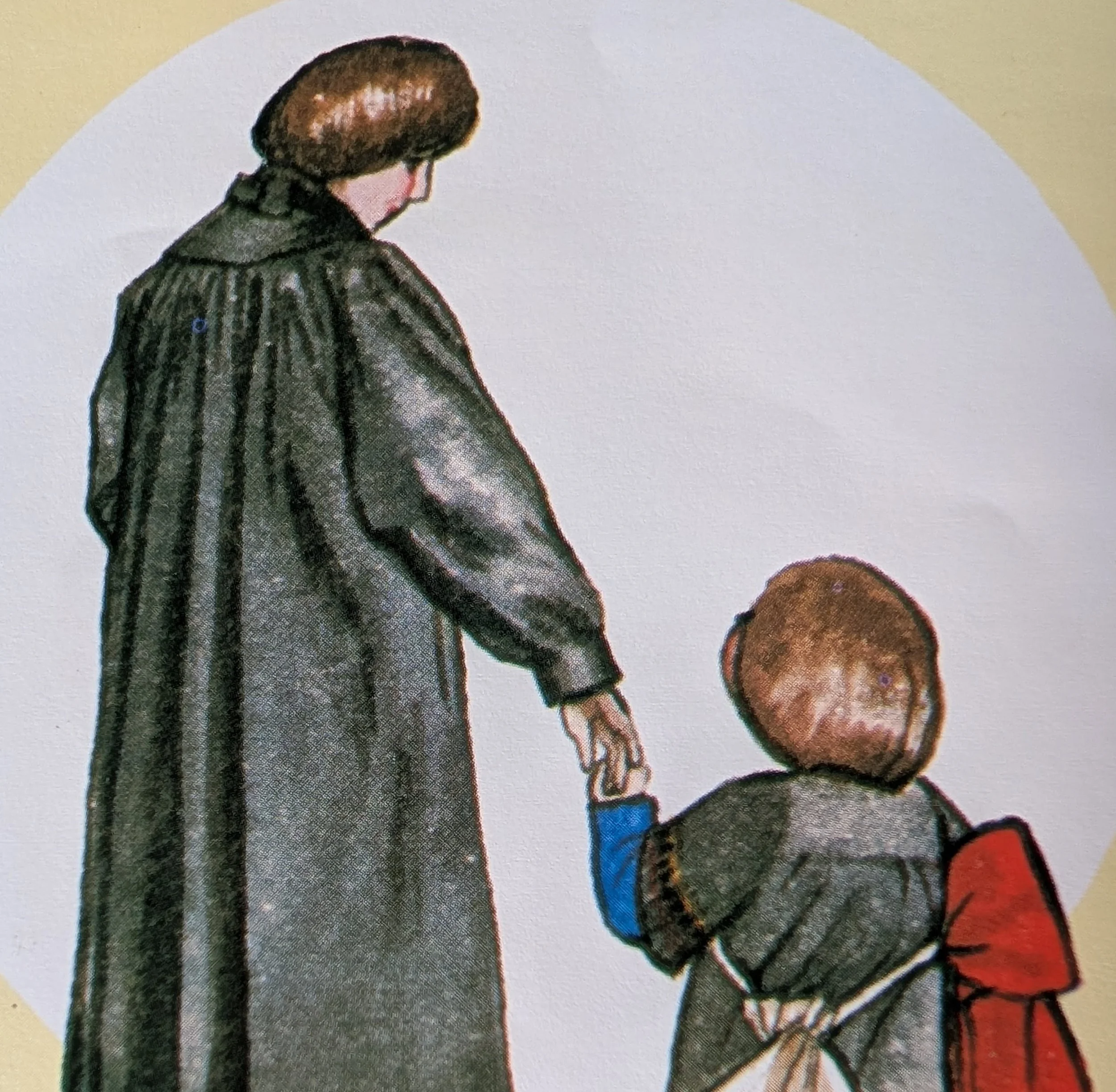
My former toddler is now 18, graduating high school in just a few months and preparing to go to college in Montreal. She has been getting herself ready solo for eons, and while her Dad and I worked remotely the last 8 years, she was the only one rushing out the door in the morning. The child I was, the child she was, is layered on top of Ormerod's original little girl, standing bemused in the chaos of morning action.
Look at these two, she seems to say, standing fully ready as her parents rush about, they aren’t prepared, but here I am, I’m ready to go.
References:
Hill, A. (1982, May). Awards: Mother Goose, The Children’s Book Award and The Guardian Award – Books For Keeps. https://booksforkeeps.co.uk/article/awards-mother-goose-the-childrens-book-award-and-the-guardian-award/
Library Mice. (2017, July 16). Up and Up! and the art of the wordless graphic picturebook. https://librarymice.com/up-and-up-and-the-art-of-the-wordless-graphic-picturebook/
Ormerod, J. (1981). Sunshine. New York: Lothrop, Lee & Shepherd. (Original work published 1981)
Seven Stories. (2018, May 16). Shirley Hughes on Creating Picturebooks. Retrieved March 31, 2026, from YouTube website:
Styles, M. (2013, February 3). Jan Ormerod obituary. Retrieved from the Guardian website: https://www.theguardian.com/books/2013/feb/03/jan-ormerod