Coloring Over the Lines: The Work of Roger Duvoisin
Note: This essay was originally published on December 23,. 2025 on VQC substack which you can follow here.
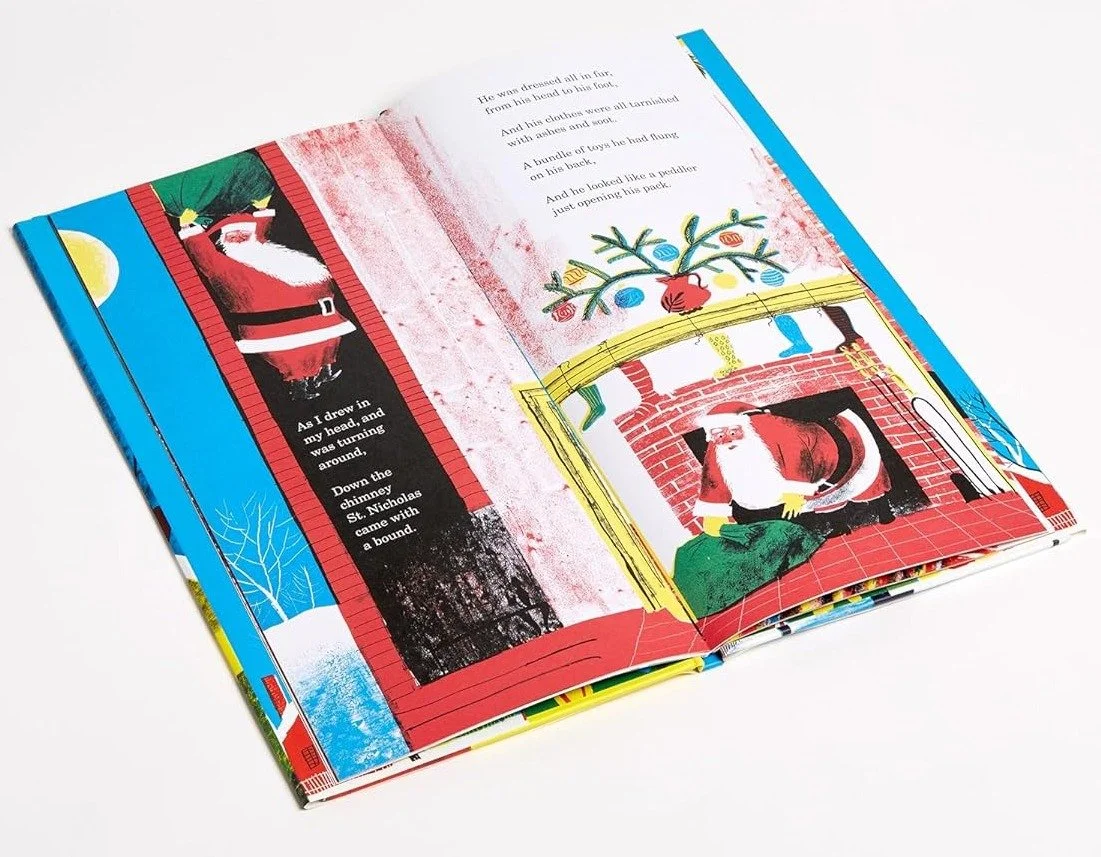
Yes, Roger Duvoisin forever, but perhaps especially at Christmas. He illustrated the best version of The Night Before Christmas - the chimney shapel! The page layouts! -
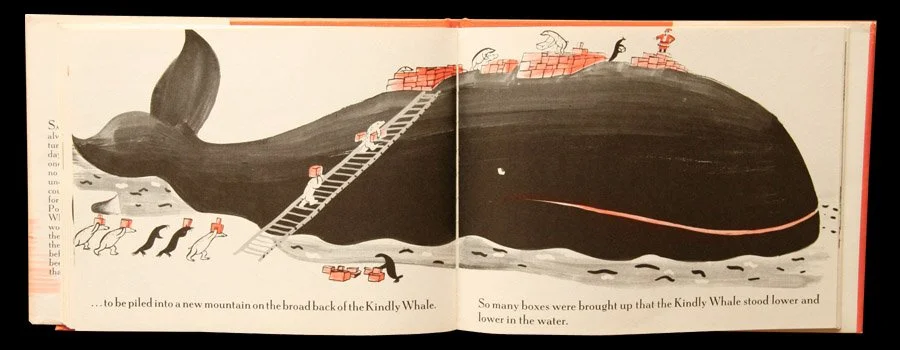
and some wonderful, oddball Christmas stories, like The Christmas Whale
and One Thousand Christmas Beards, with the unlikely premise of Santa going around the world to yank the beards off mall Santas, until his conscience prevails and he sends them all back with a box of sweets. Look at these endpapers:
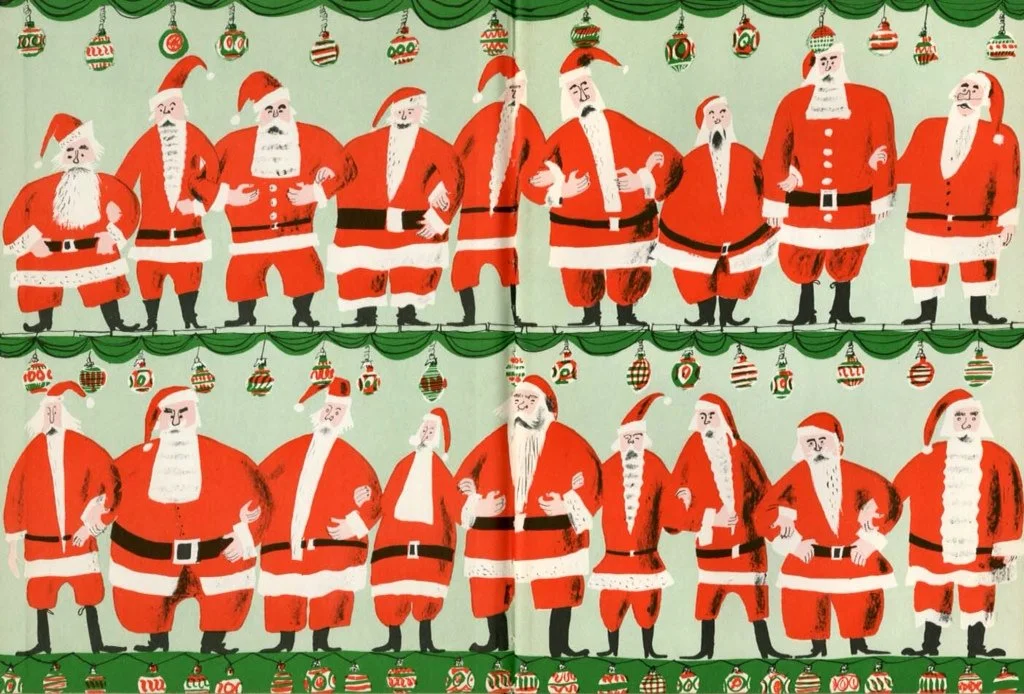
image tygertale
and the very ungentle Christmas action as he snatches beards:
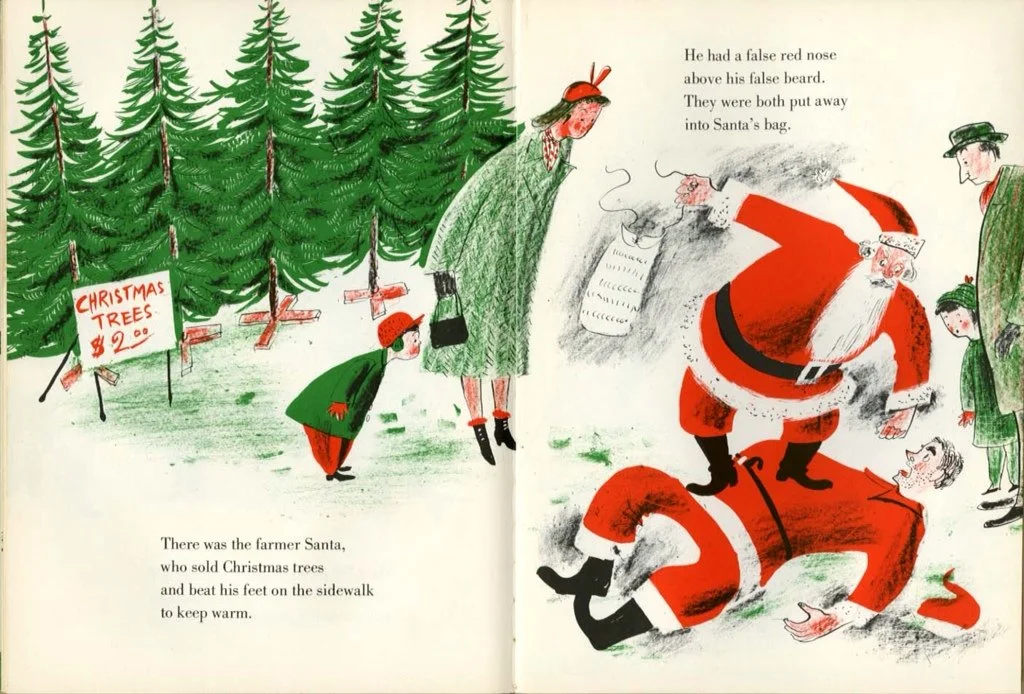
image tygertale
But I first met Duvoisin through Petunia’s Christmas, in the dark of my 3rd grade classroom: the click of the filmstrip advancing, the accompanying cassette warbling the text and the bold outlines of a white goose with green wreaths around her neck and wingtips, trying to save the life of her true love, a gander named Charles.
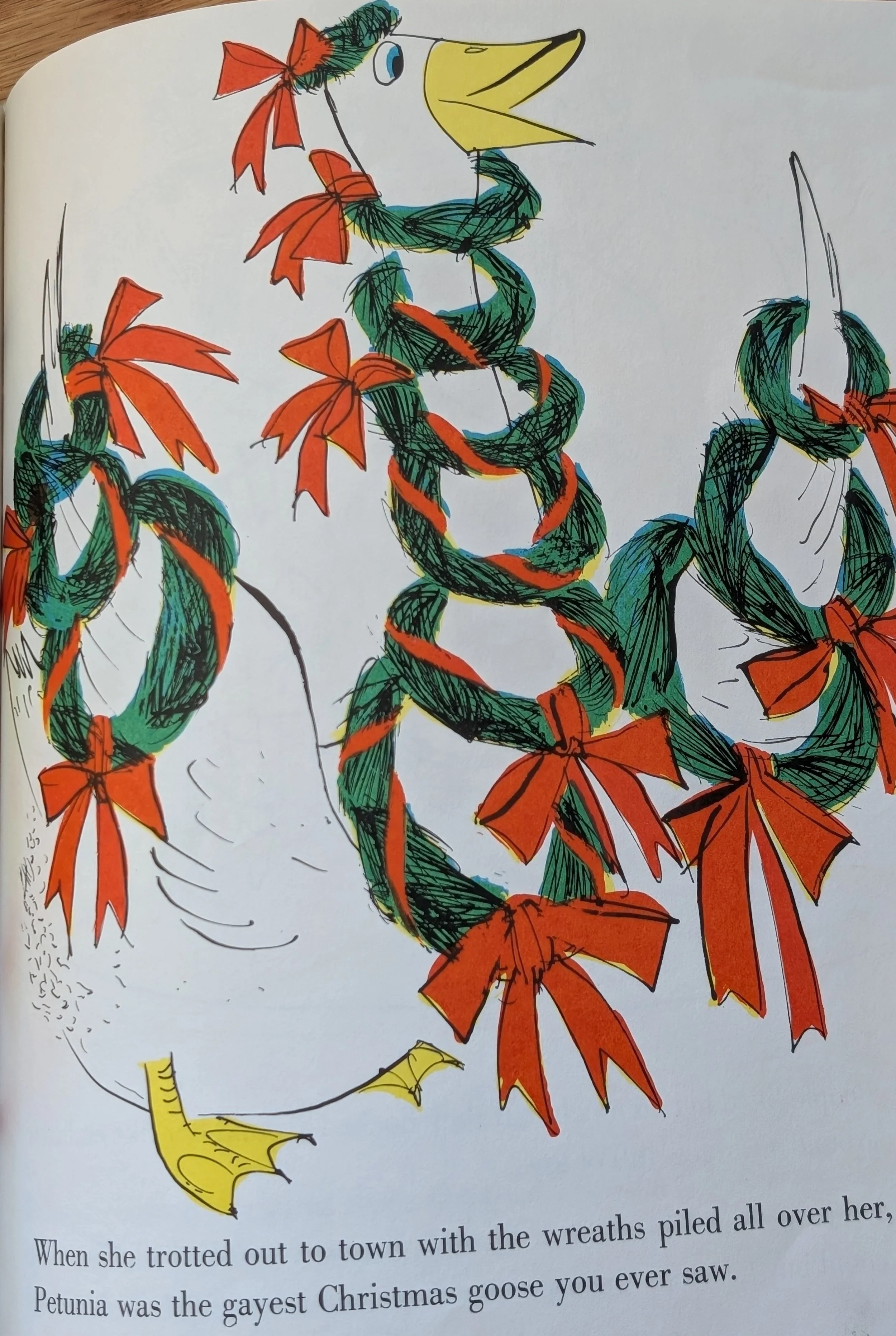
I checked it out from the school library over and over, and it was the first Duvoisin book I bought when I began collecting kids books as an adult. If I find his work in the wild, I have to buy it. It would be an incredible feat to be a Duvoisin completist - he wrote and illustrated 40+ picture books of his own and illustrated over 140 books for other people - but I’m working on it.
His line work is so expressive, and his colors so vivid, I can spot a Duvoisin across a crowded thrift store, or on a library shelf. Recently, I had one of my versions of a perfect day - picture this:
a wooden study carrel next to window in a university library,
shelves and shelves of kids books from across the decades to pile up, dip into and flip through.
not a shiny new bookstore, with the latest and greatest, but deep cuts and printings you could never hold in normal life,
a library that understands weeding doesn’t apply here, that all of these old children’s books are markers of what mattered and what we wanted to show and how we made things.
On this particular perfect day, I found a 1955 Duvoisin and Charlotte Zolotow collaboration One Step, two… 70 years after it was published, the illustrations on the thick, creamy paper are still vivid and edge to edge color. The pink! The clothesline! The birch trees!
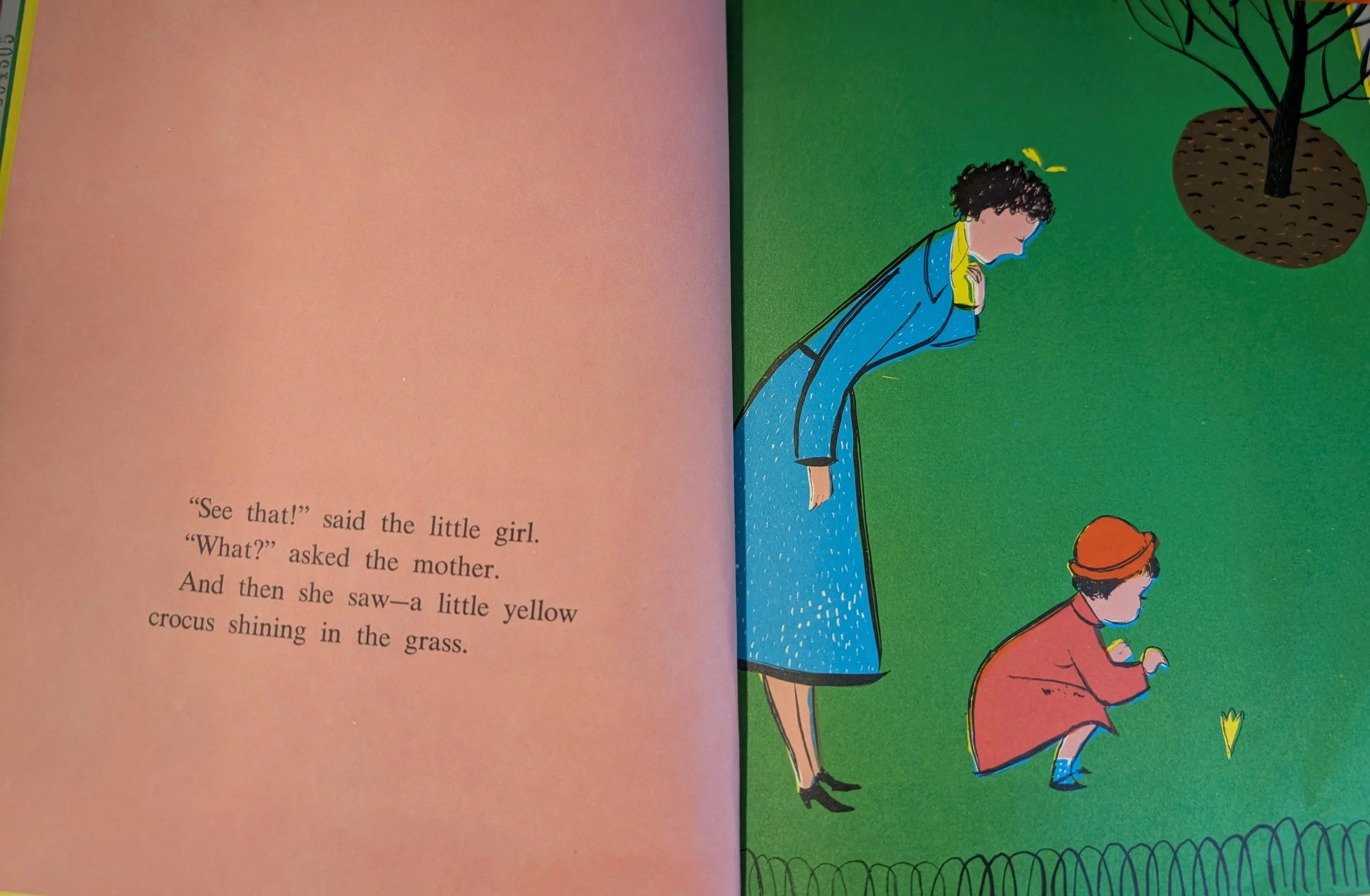
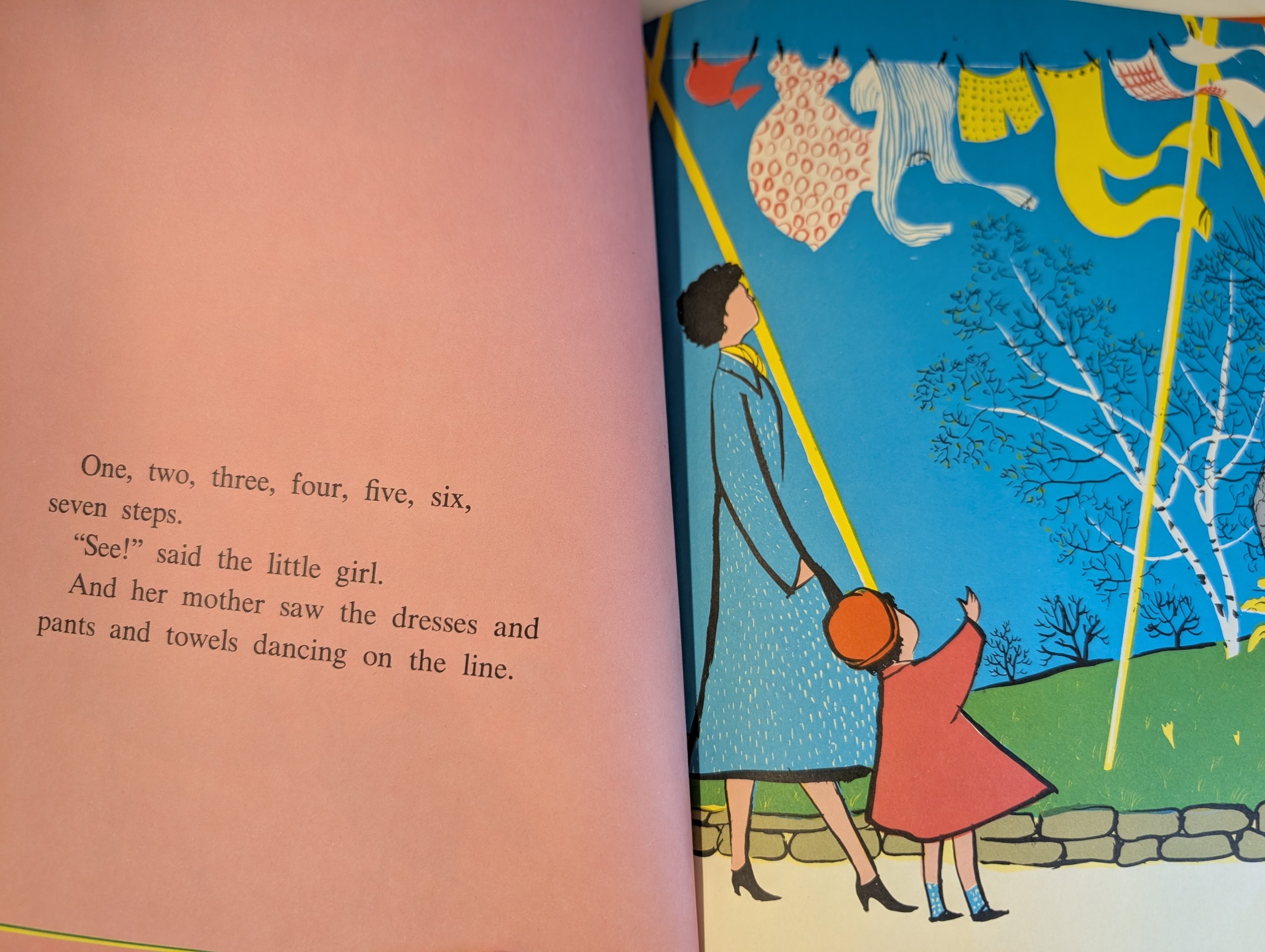
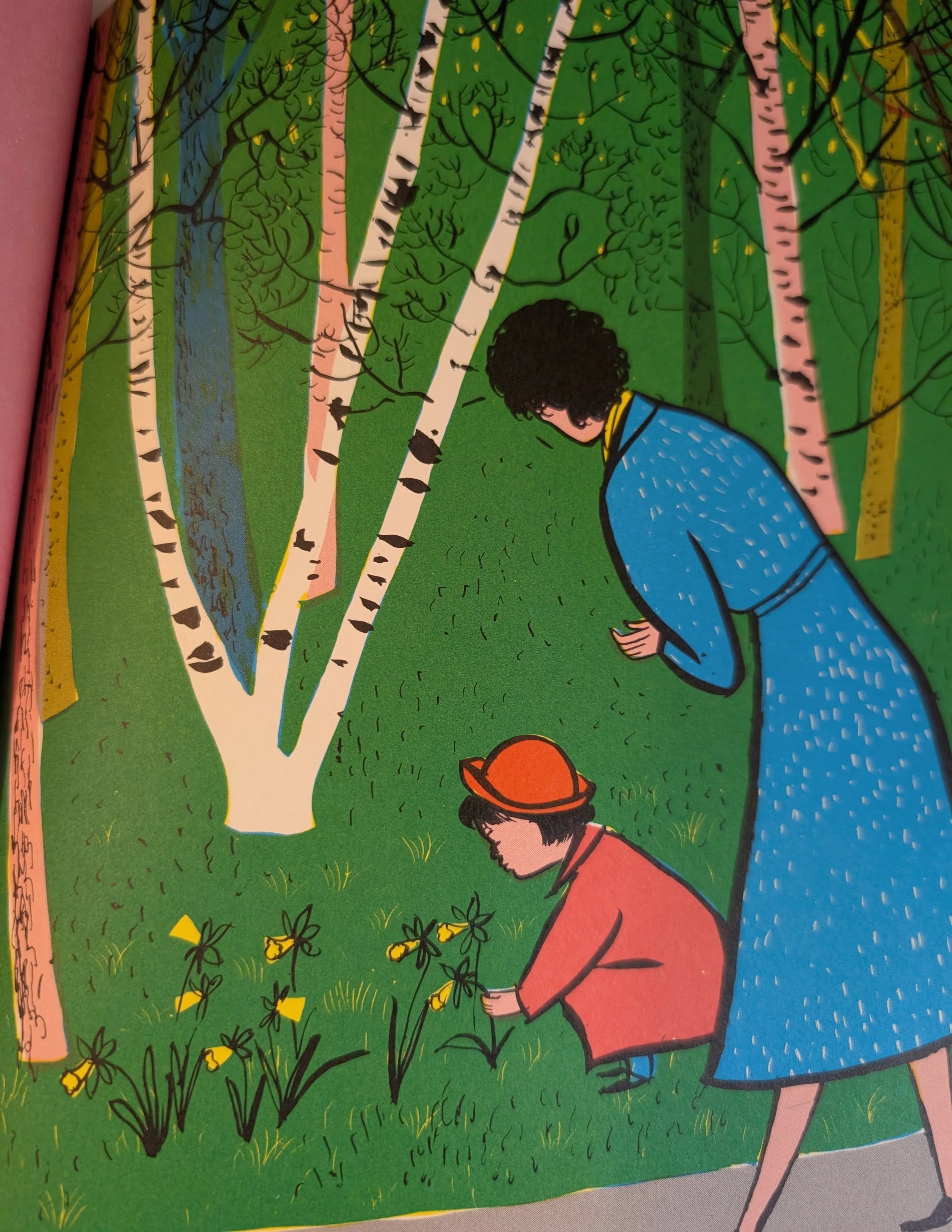
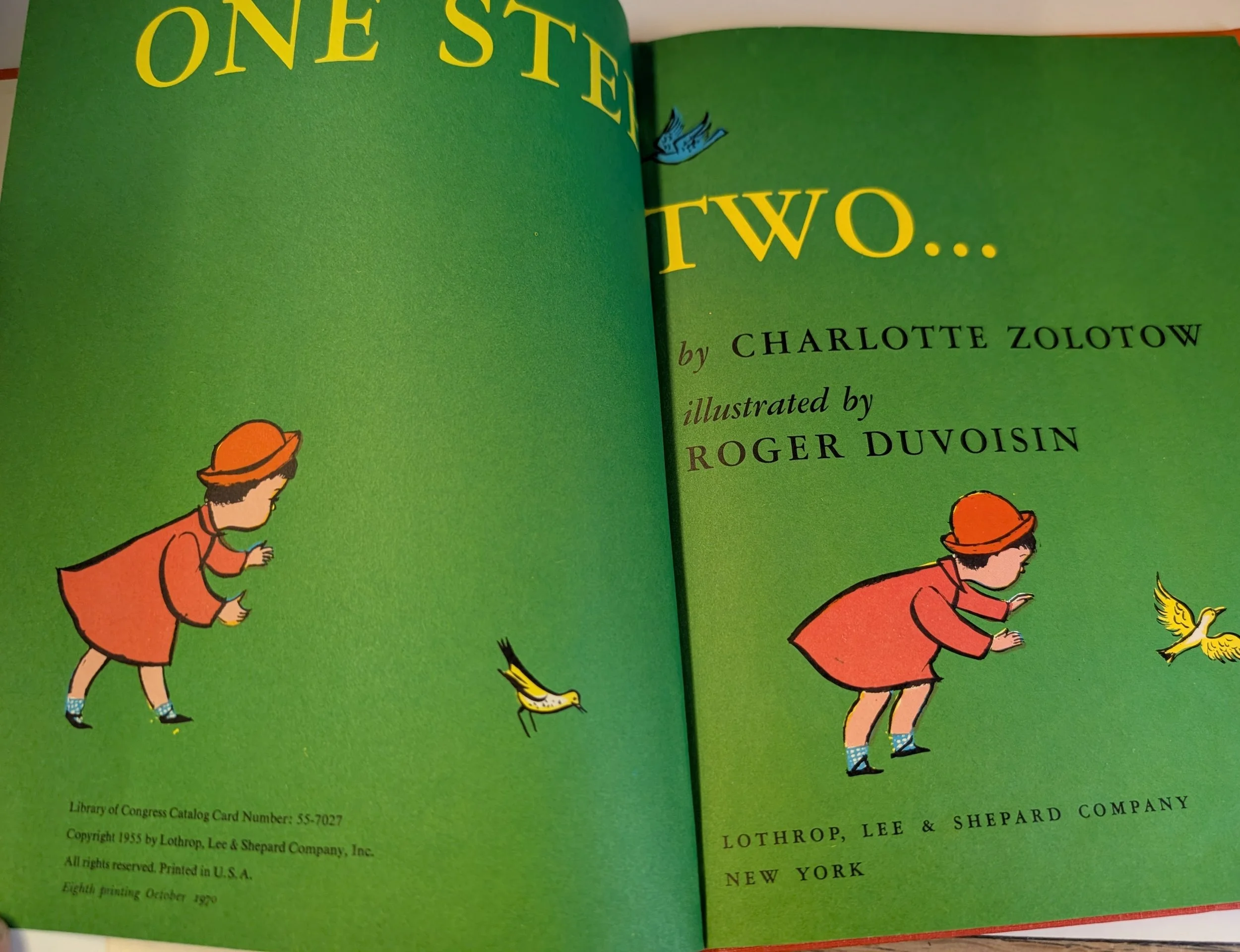
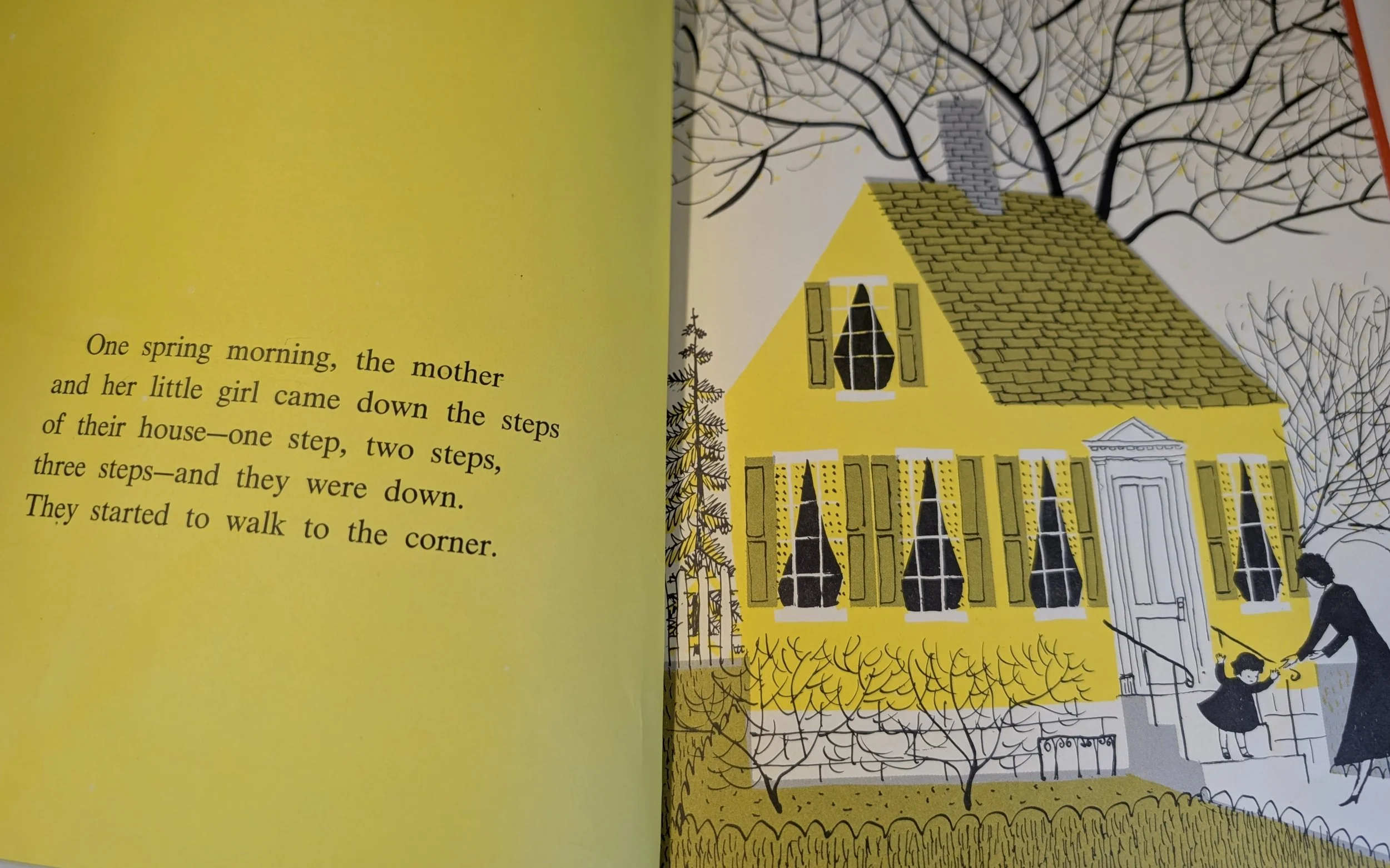
Maybe his use of end to end color and pattern came from his textile background . Duvoisin, born in Geneva Switzerland in 1900, was living and working in Paris when he was recruited to work for the Maillinson Silk Company in New York City. He and his wife Louise Faito arrived in 1927 and when it went bankrupt during the Depression, turned to illustration work, for advertising and The New Yorker and eventually, children’s books.
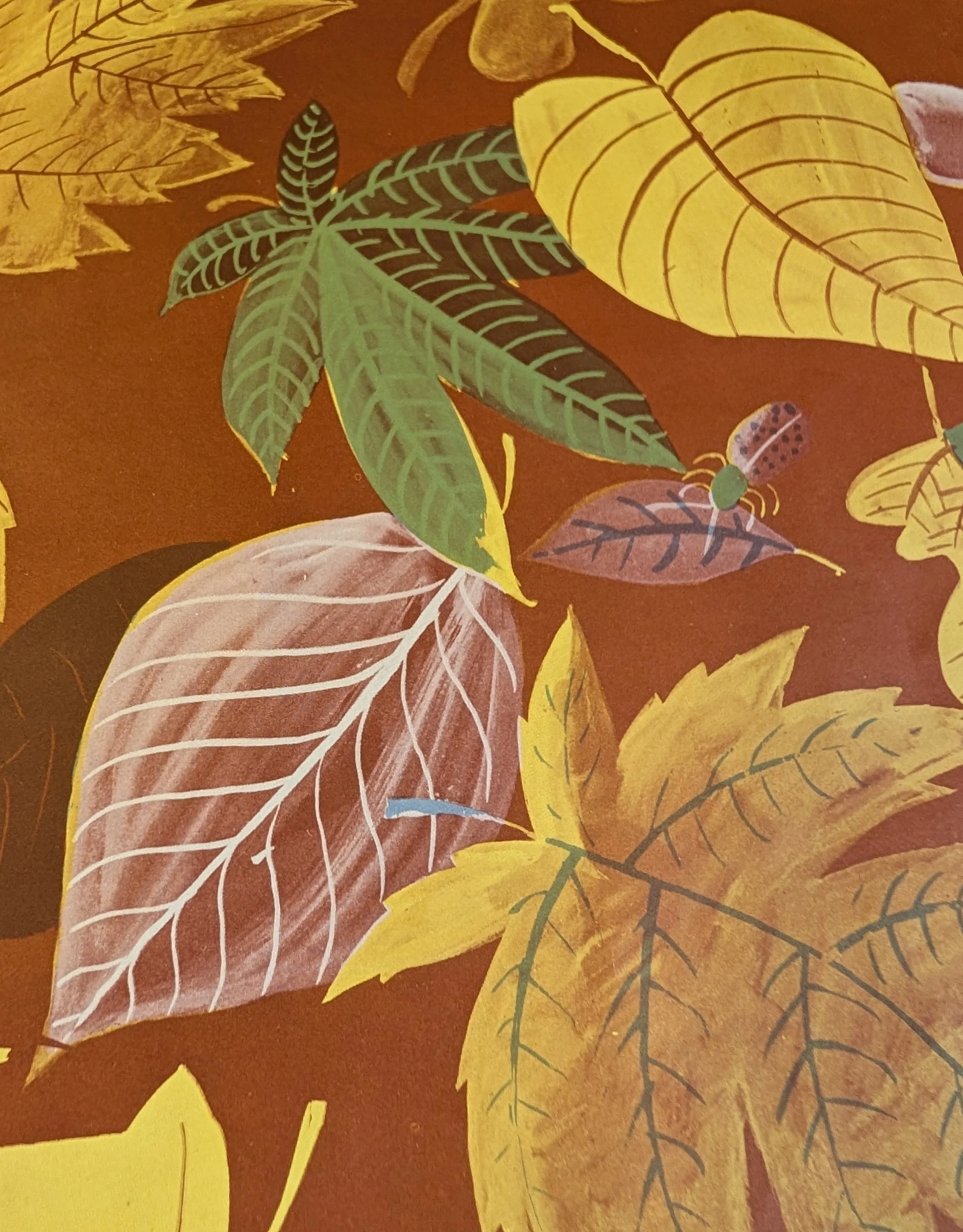
Pre-CMYK printing, many illustrators not only did the drawings but managed them for the printing too and of course it was less expensive with less colors so which is why there are so many fantastic 1950s-1970s picture books with black and white on one page and a limited pallet of two or three shades overlapping on the color plates..
Illustrator Joo HeeYoon examined some original Duvoisin manuscripts and wrote about it for The Horn Book:
The artist was tasked with creating a separate layer for each of the color inks used, and when the layers were printed on top of one another, the full image materialized. This was an efficient way to create secondary colors rather than adding another ink into the mix..
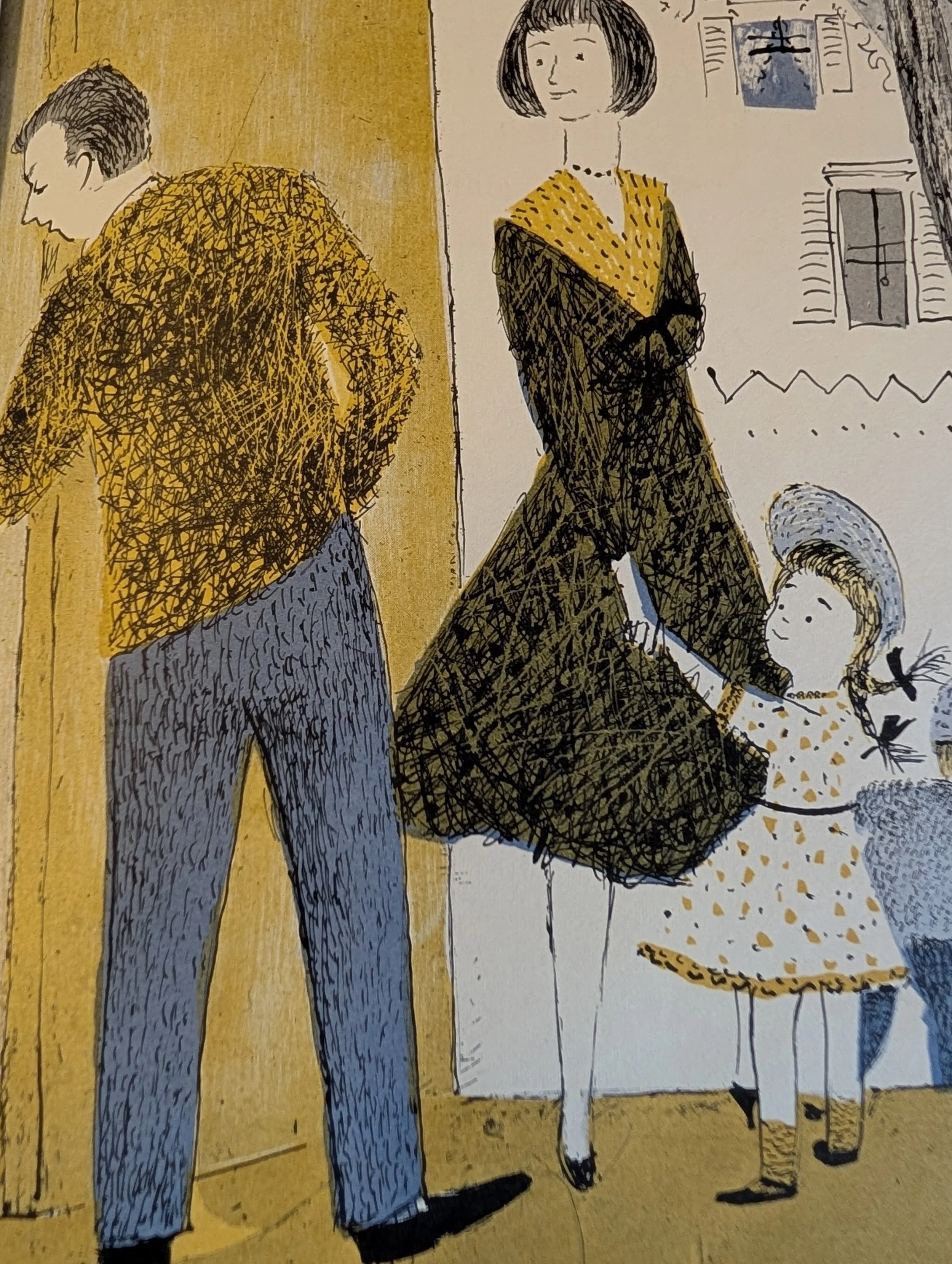
Duvoisin was a true master at stretching a limited color palette by overlapping the inks he had available in order to produce a surprisingly wide spectrum of colors. The resulting art is wonderfully full of life, bursting with spontaneous energy…. [his] black-and-white separations, created primarily with India ink on translucent sheets of plastic as the drawing surface, were beautiful in their own right. He mixed washes with crosshatching and stippling, line work with solid shapes, and sometimes scratched back into the inked areas. This resulted in a wide variety of textures and a sense of spontaneity.
You can see that texture in the clothing from another Zolotow/Duvoisin collaboration, The Poodle who Barked at the Wind (1964):
Somewhat inexplicably, some Duvoisin original manuscripts are held at the University of Oregon Special Collections, including One Thousand Christmas Beards and A Doll for Marie. It’s a New Year resolution to visit and put my (gloved) hands on the original artwork of this incredible artist and see these techniques for myself.
Flipping through his books, I think of those moments when Duvoisin was in a new country with his wife and young children, having lost his job to the Great Depression, likely worried about the future and wondering what to do next, not yet knowing that this life - remembered by his granddaughter Anne Duvoisin - lay ahead:
After becoming successful, they were able to buy some land in New Jersey and build a Frank Lloyd Wright design house, surrounded by their own 20 or so acres, which in turn were surrounded by enormous landholdings belonging to the very wealthy. It felt like living in a national park.
In the way of animals, they had peacocks, chickens, swans, ducks, guinea hens, dogs, cats, all manner of birds, and they rescued baby animals of all sorts. They had a beautiful vegetable and fruit garden and several chicken coops. They had several orchards, where they grew apples, cherries, peaches and pears. They also grew red currants and raspberries and rhubarb as well as virtually every vegetable and flower that was native to the area. It was a sort of small-holding where they were gentleman farmers. It was an idyllic place which they loved, as did I. My grandmother used to cook great feasts for the whole family and my grandfather’s colleagues and publishers. She was a gourmet cook, and although she didn’t develop her own career as an artist, she would make lace, sew beautiful clothes in her sewing studio and plan the garden. She made a beautiful home. They were epicureans and knew how to live life well.
A fitting reward for the beauty he brought to the world, especially to children.