Yellow August
or, the impossibility of Natalie Babbitt in 2026
August is a tricky month. Harvest gold and curling at the edges, these days it often comes with a side of smoky skies, which they are in Portland, OR as I type these words. August’s time is literally fleeting; on August 1st, the sun rises at 5:54 am but by the 31st, dawn is 6:30 am and sunset is 7:49 pm. My garden reaches peak wildness/neglect and it’s a race to harvest what we can from the untidy tangles of drooping plants, eventually just letting the plums and apples splat to the cement, pocked with bird bites and worm holes. My birthday is the last week of August and as a kid, because school hadn’t started yet, I didn’t get to bring in a tray of cupcakes or hand out birthday party invitates to my class - yet it was still stained with Back to School dread, felt especially acutely when I was a grown-up school librarian.
Natalie Babbitt gets it. Each year when I flip my calendars to August, I re-read her book Tuck Everlasting and the (almost memorized) opening paragraph:
“The first week of August hangs at the very top of summer, the top of the live-long year, like the highest seat of a Ferris wheel when it pauses in its turning. The weeks that come before are only a climb from balmy spring, and those that follow a drop to the chill of autumn, but the first week of August is motionless and hot. It is curiously silent, too, with blank white dawns and glaring noons and sunsets smeared with too much color.”
Even the cover (a Babbitt watercolor) looks like today’s smoky skies of August:
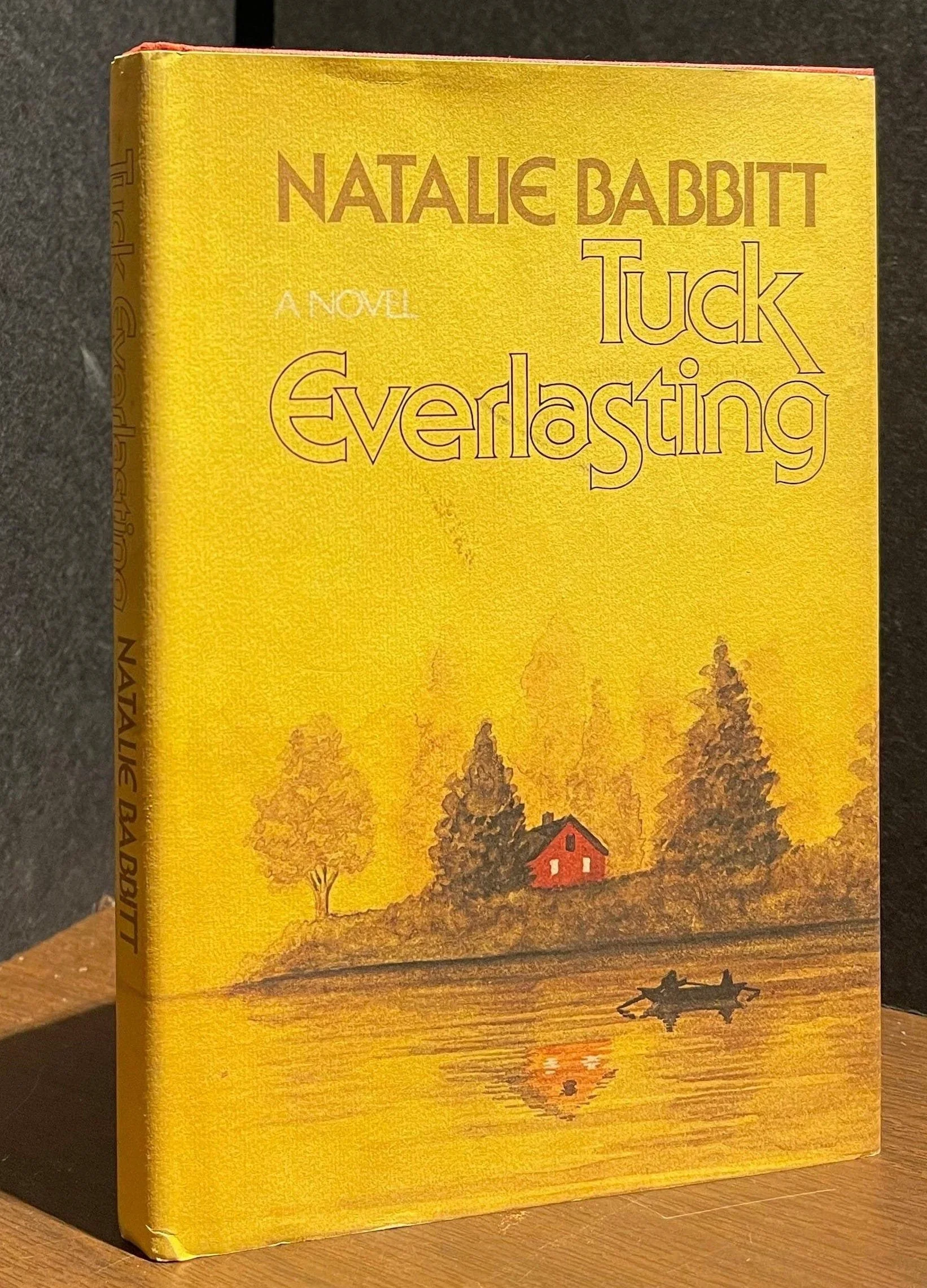
I vividly remember reading these lines in Grade Four on my school library rug and thinking, even then, that Babbitt had found just the right words . Funny, because Natalie Babbitt originally wanted to be a book illustrator, but when she began writing at the encouragement of her long-time editor Michael di Caputo, she took special care with that form of mark making too. In a 2000 Horn Book interview Babbitt said:
“As far as drafts are concerned, the way I’ve always worked is different from some of my colleagues who go from A all the way to Z and then start all over again to do their rewriting. That’s a perfectly good way, but I rewrite each sentence when I come to it until it’s just the way I want it.”
Tuck Everlasting is about time and growing older and the secret to eternal life and what it would really be like to stay paused in time instead of on the ferris wheel of years. There is a sinister “man in the yellow suit” who wants to possess the secret, and I always thought his yellow suit reflected the season of the book, the late summer goldenrod and the decay of just turning leaves. But Babbitt said of him:
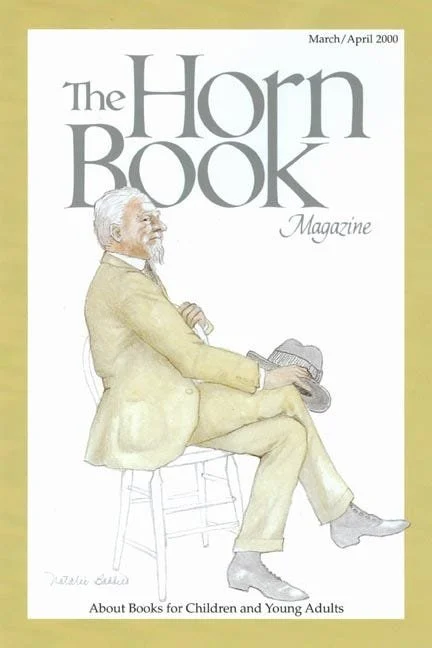
Babbit’s painting of the man in the yellow suit for the cover of The Horn Book Magazine in 2000
The man in the yellow suit did have a name in the beginning, though I can’t now remember what it was. I tried to find a very neutral name, but as long as he had a name, he was not as threatening…So I took his name out. The yellow suit, however, is not like that at all. He wears a yellow suit because I needed a two-syllable color and nobody wears purple. And the reason why he needs a two-syllable color is because I use that phrase over and over again — “the man in the yellow suit” — and it has to have a certain kind of music to it. If it were “the man in the black suit,” the sound would kind of clump. That’s the only reason for the yellow.”
“That I should attempt a picture of the man in the yellow suit was Roger Sutton’s idea, and when he first broached it to me, I said no, I was too busy, couldn’t handle it. But almost before the words were out of my mouth, I was struck by what an extraordinary idea it was. I sat down to see what I could do, and it was as if this portrait had been waiting in my pencil for years. It seemed to draw itself. There was even — Heaven help me — a kind of urgency about it. Almost at once, there he was, looking out at me. What is he thinking as he sits there? Whatever it is, I find it chilling. Surely it isn’t possible to be haunted by the ghost of a made-up character slain in a work of fiction. But if it is possible, then the man in the yellow suit is after me, not Mae Tuck. He seems to understand that I am the one who spoiled his plans.”
The precise approach Babbitt takes with language, matches her drawing style. She illustrated her own books, even the chapter books, with simple pen and ink drawings. She and the poet Valerie Worth did a series of books together: Small Poems [1972], More Small Poems [1976], Still More Small Poems [1978] and Small Poems Again [1986]. The two met at an informal writing group at Kirkland College in Clinton, NY, where their husbands worked. As Worth explained it:
"I read some of my poems aloud to the group. When Natalie heard them, she said,`I'd like to send your poems to Michael di Capua at Farrar, Straus & Giroux to look at.' The whole experience was a most fortuitous one." Shortly after her work reached di Capua, he offered to publish her first volume, Small Poems.
"This was a great time for me," she said. "I had been writing for a long time, and I wasn't publishing much." Knowing that an illustrator was being sought to do pictures for the collection, she asked Babbitt if she might have any interest in illustrating the book. "I'm so glad you asked me!" exclaimed Babbitt.
Thus, the collaboration began…"Natalie and I are very close friends," Worth says. "I had some input into the artwork in that I suggested some things to be drawn. Occasionally, I would send her a small magnet or a tiny copper bell I owned—objects that inspired the creation of the small poems."
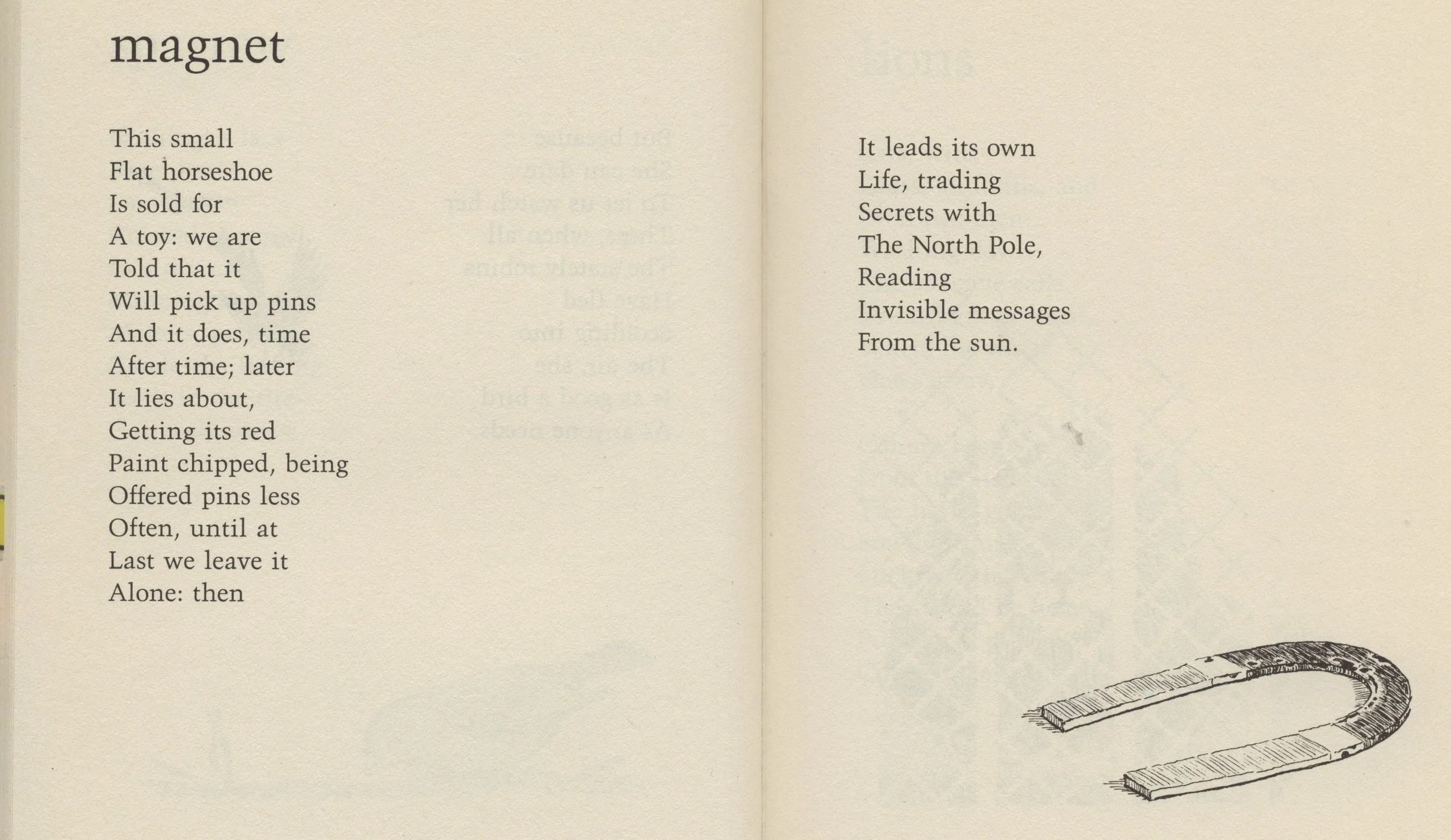
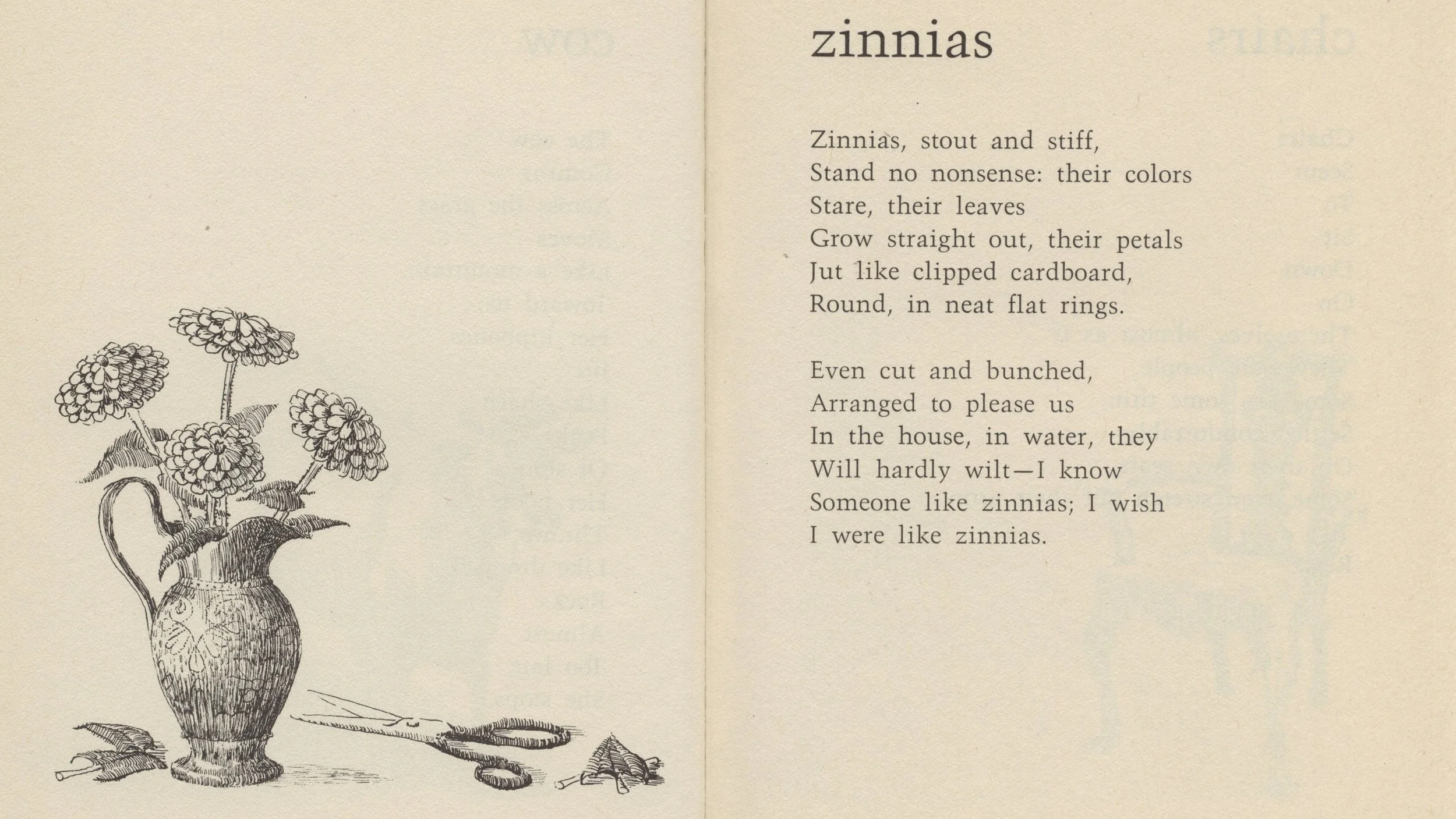
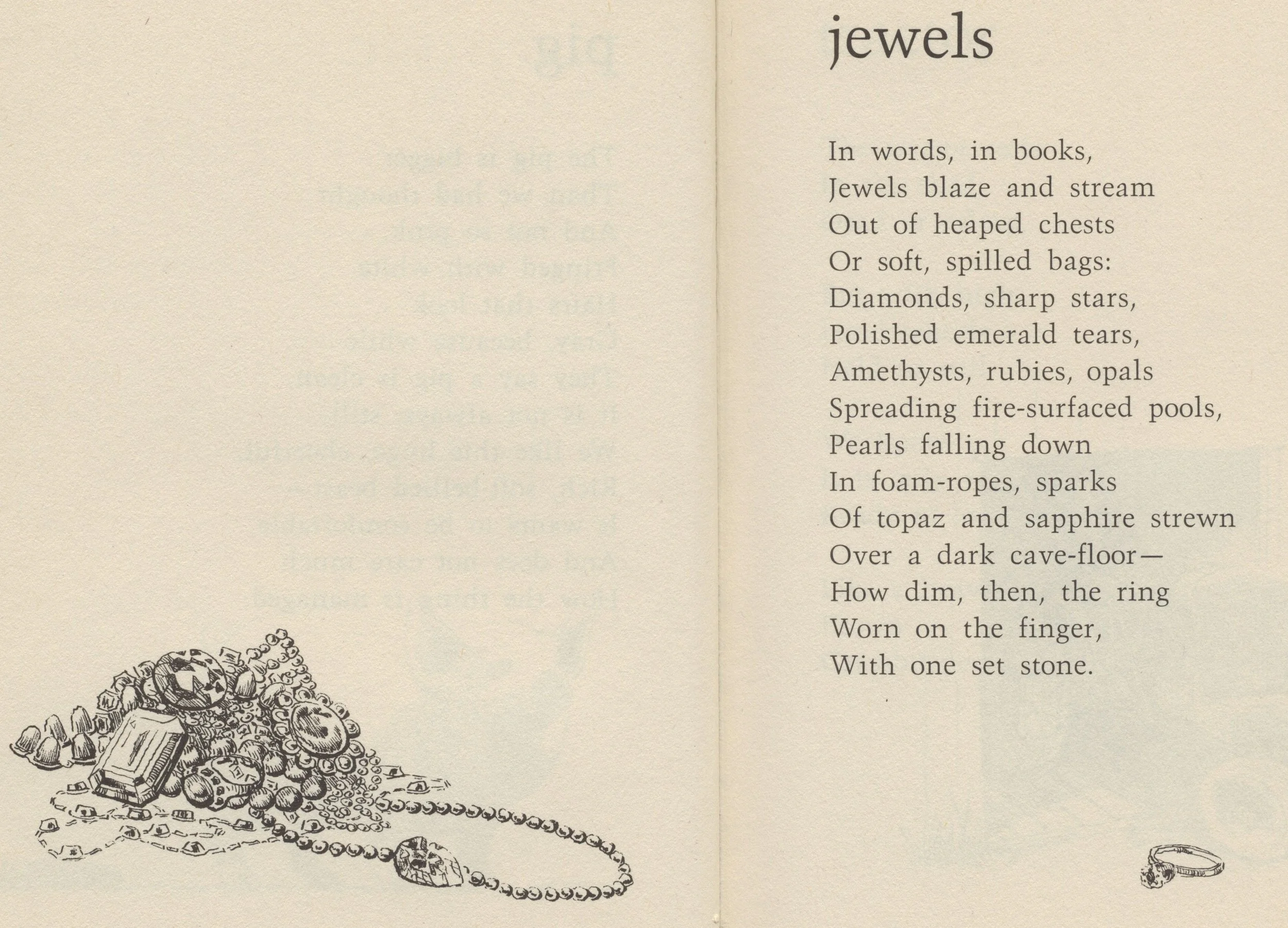
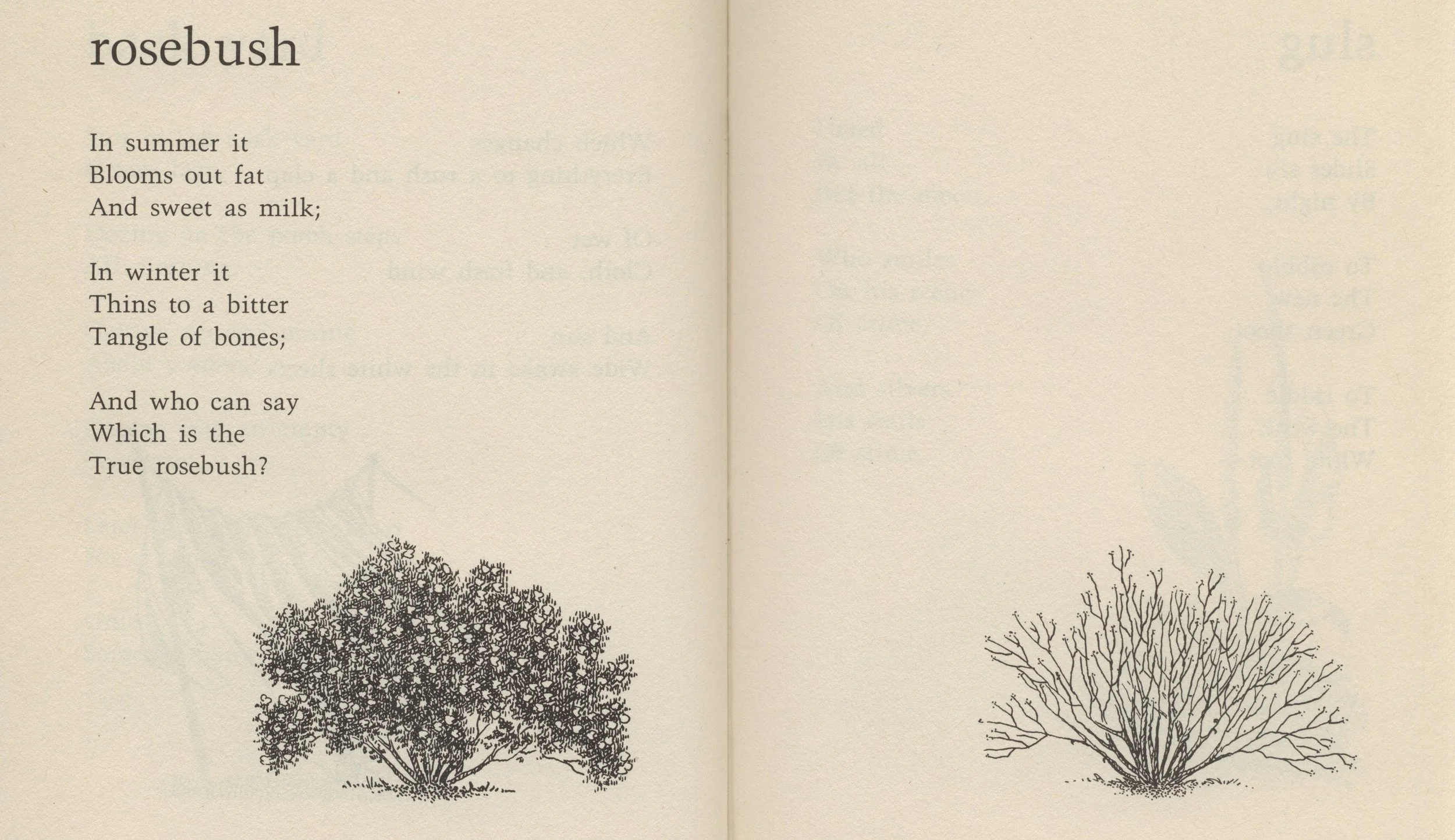
I’m not sure small poems about magnets, zinnias and the disappointment that might be held in a wedding ring, illustrated with spare black and white lines would be published for children today, but I’m very glad they were. I can’t imagine a modern query letter for a middle grade book about eternal life, why it might be better to eventually die, and the circle of life itself, would get an agent, let alone published. Yet Tuck Everlasting has never been out of print, has inspired a movie and a musical play, and captured a child’s imagination so completely she is called back every yellow August to rediscover it.
References:
Babbitt, Natalie. “The Purpose of Literature – and Who Cares?” 1989.
---. Tuck Everlasting. New York, Square Fish, Farrar, Straus And Giroux, 1975.
Book, Horn. “Circling Tuck: An Interview With Natalie Babbitt.” 2018.
---. “On the Cover: The Man in the Yellow Suit.” The Horn Book, 2018, https://www.hbook.com/story/on-the-cover-the-man-in-the-yellow-suit.
Mccord, Aileen, and Fisher ; Lilian Moore. “Profile: Valerie Worth.” NCTE, National Council of Teachers of English, 1977, https://cdn.ncte.org/nctefiles/about/awards/worth.pdf.
“Natalie Babbitt - Our White House | Looking in, Looking Out.” Our White House | Looking In, Looking Out, 20 July 2016, https://ourwhitehouse.org/natalie-babbitt/.
Saxon, Wolfgang. “Valerie Worth, 60, Is Dead; a Novelist for Young Readers.” The New York Times, 3 Aug. 1994, https://www.nytimes.com/1994/08/03/obituaries/valerie-worth-60-is-dead-a-novelist-for-young-readers.html.
Worth, Valerie, and Natalie Babbitt. All the Small Poems. Farrar, Straus and Giroux, 1987.